When a fifth grader pitched an idea at a planning meeting, teachers and school leaders ran with it. By festival day, it had become a schoolwide Freecycle event serving families across the community. That kind of thing doesn’t happen by chance. At Belvoir Elementary, it happens by design.
Student agency—the belief that learning has purpose, ideas carry weight, and actions can create change—develops through repeated experience. Most schools have initiatives designed to support it. Fewer have built the day-to-day experiences that consistently answer the three questions at the heart of it:
- Why does this learning matter?
- Do my ideas matter?
- Can I make a difference?
Belvoir Elementary School (Pitt County Schools, NC) is one example of what it looks like when a school designs for all three. Throughout the year, students investigate local and global challenges, use academic skills to understand them, and take action on what they learn. The school’s annual Global Festival makes that work visible, but the event is the result of something happening in and across classrooms all year long.
For school and district leaders, this is what intentional design for student agency looks like in practice.
What is student agency?
Student agency is a student’s belief that their learning matters, their ideas are heard, and they can influence the world around them.
A student can participate in class, complete assignments, and perform well academically without developing any of that. Engagement describes behavior. Agency describes how students understand their own role.
Students develop that belief through repeated experiences that show them they can contribute, influence decisions, and create change. Belvoir’s approach offers one example of what those experiences can look like in an elementary school.
“Why does this learning matter?” Connecting academics to real issues
Global learning creates natural opportunities for agency because students are asked to investigate real issues, consider multiple perspectives, and identify ways they can contribute. Instead of learning solely for a grade, students begin using academic skills to understand challenges that affect real people and communities.
At Belvoir, teachers use community and global topics as the context for learning, rather than treating them as enrichment activities layered on top of the curriculum.
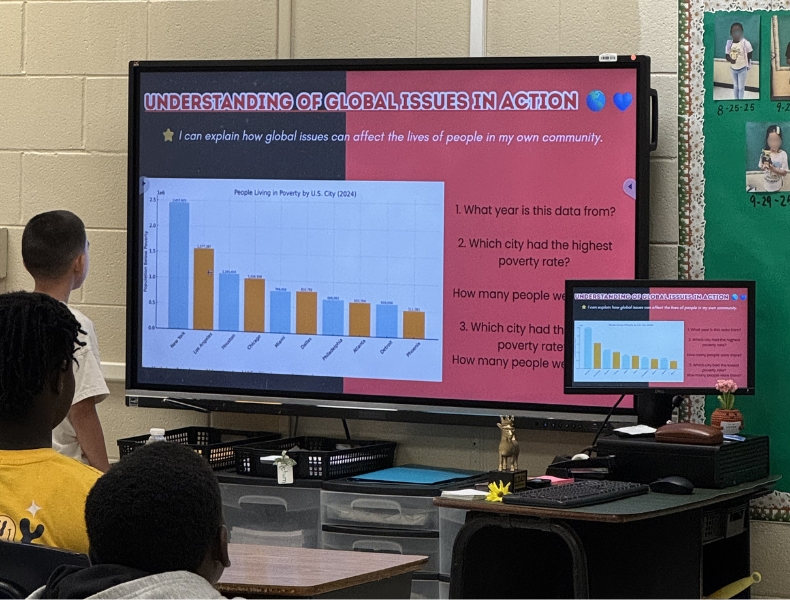
Throughout the school year, third-grade students explored poverty and food insecurity while developing core academic skills. They worked with data to strengthen graphing and mathematical reasoning. They read Maddi’s Fridge, A Simple Wish, and Empty Pockets, using literacy lessons to explore fairness, empathy, and access to resources. The goal wasn’t to set standards aside in favor of a social issue. It was to give students a reason to use them.
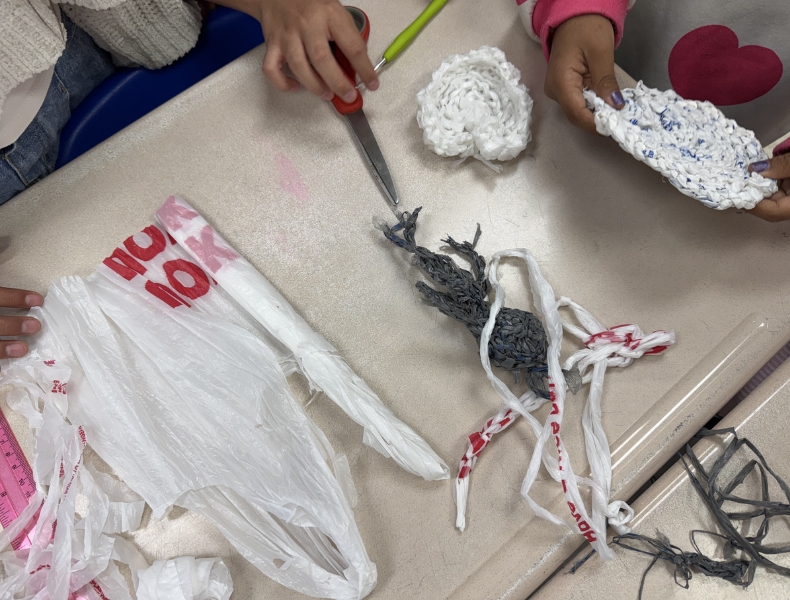
Fourth-grade students researched how ocean litter affects marine life, created presentations on recycling and environmental stewardship, and made “plarn” (yarn spun from recycled grocery bags), with plans to crochet reusable bags that would support the third-grade project on housing insecurity. The two efforts weren’t designed in isolation; they connected students across grade levels around shared themes of community impact and responsible action.
When that happens, academic skills stop being tasks students complete because they’re assigned and become tools students use to answer questions they care about.
The replicable move: Identify at least one unit per grade level where a real community or global challenge serves as the reason for the academic work rather than an add-on.
“Do my ideas matter?” When student voice leads somewhere
Many schools collect student feedback. Fewer create opportunities for students to see what happens after they share it.
Belvoir’s Student Global Ambassadors program brings students into regular conversations with school leaders to share ideas, discuss school experiences, and suggest ways to strengthen their community. Teachers also make a point of including students who might not naturally seek out leadership roles, which changes who gets to participate and whose perspectives are heard.
The Freecycle event grew out of one of those conversations. During planning for the Global Festival, a fifth-grade student, inspired by a similar event she had seen in a local community group, suggested creating a “Freecycle” opportunity to support families in need. Teachers, school leaders, and the school’s global committee helped turn the idea into a schoolwide effort. Families and staff donated clothing, books, and toys–enough to fill an entire classroom. Visitors were invited to take what they needed.
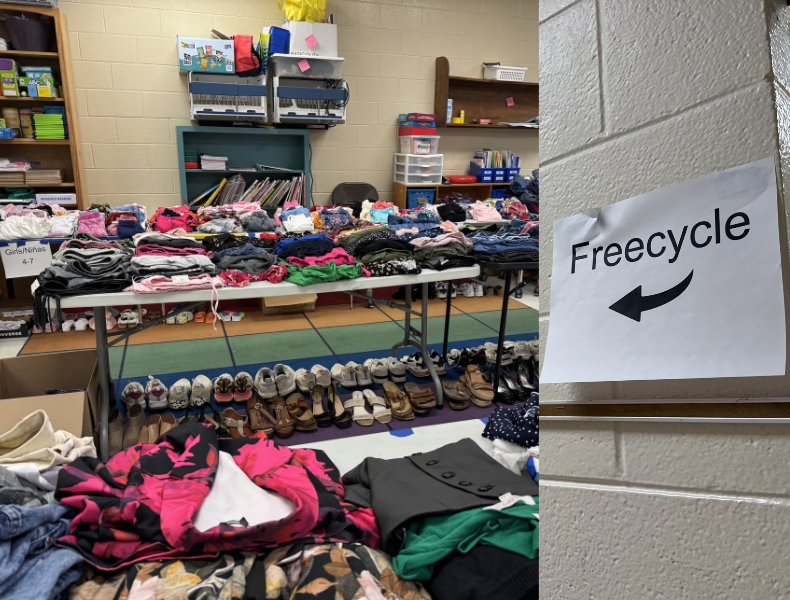
What students witnessed mattered as much as the event itself. An idea raised in a meeting became something real. They saw the path from suggestion to decision to action and understood they were part of it.
The replicable move: Create at least one structure where students can see a direct connection between their ideas and a change that follows. Make that connection visible and talk about it openly.
“Can I make a difference?” Learning that leads to action
Knowing about a problem and believing you can do something about it are different experiences.
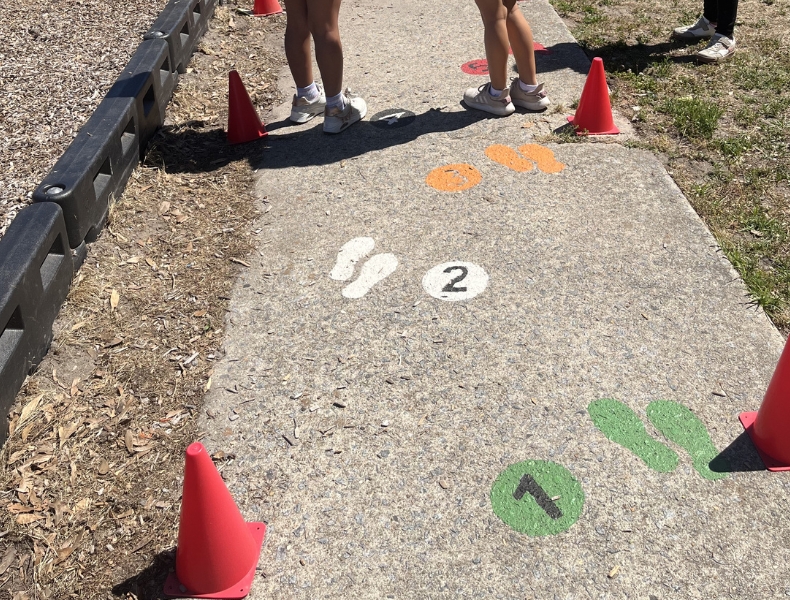
As third-grade students learned about food insecurity, they assembled snack bags of peanut butter and jelly sandwiches, fruit snacks, and a fun-size chocolate bar for people experiencing housing insecurity and included handwritten notes of kindness. First graders explored fairness and conflict resolution through lessons on peace paths, a step-by-step process that guides students through understanding one another’s perspectives during a disagreement. Later, a peace path was painted on the playground, turning a classroom concept into something students could use throughout the school day.
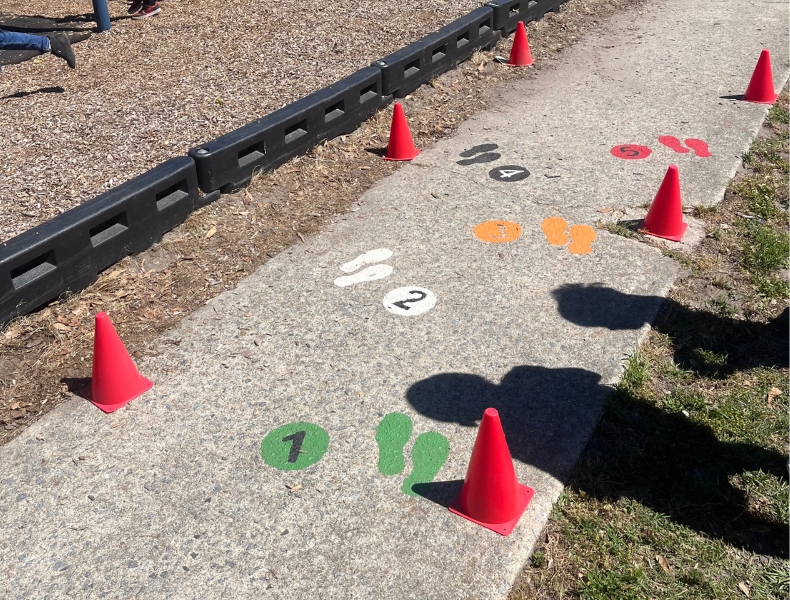
Putting together a snack bag for someone else is evidence that you helped another person. Seeing a peace path on the playground shows that something you learned has become part of your school. Those aren’t small things to a student.
The replicable move: Whenever students are exploring a real-world challenge, include an opportunity for action. It doesn’t have to be large. It does need to be real, and students should be able to see the results.
How students recognize their own growth
The Global Festival gives students an opportunity to share their work, but it also creates space for reflection.
Students explain what they investigated, how their thinking evolved, what they learned, and what actions they chose to take. Displays include student reflections alongside examples of the global competencies they practiced throughout the year.
When a student explains to a parent how their thinking about food insecurity changed over the course of a project, they’re making sense of their own growth: connecting what they learned, what they did, and why it mattered. Families benefit too. The festival provides a clearer picture of how academic skills are being applied in ways a report card alone can’t capture.
Reflection not only helps students remember what they learned, but also helps them see themselves differently.
The replicable move: Create opportunities for students to reflect publicly on their learning. Ask them not only what they learned, but how their thinking changed and what they chose to do with it.
The takeaway for school and district leaders
Belvoir’s approach is less about launching a new initiative and more about making intentional decisions: about what problems anchor a unit, how student feedback gets structured, whether action is built into the work, and how impact is made visible. Any of those decisions can be made independently. But together, they give students something harder to manufacture: years of repeated evidence that their learning has purpose, their ideas are taken seriously, and their actions affect other people.
Schools that want students who see themselves as capable of contributing have to design for it.
Every time a student gets a convincing answer to one of the three questions, their sense of agency grows. The goal isn’t a single transformative moment. It’s enough moments that students come to see themselves—reliably, not situationally—as people who have something to contribute.
“When you give a kid something that matters, they can’t get enough of it.” Hear from Roosevelt Middle School teachers, students, and administrators about the impact student agency has had in their school
Interested in learning how your district or school can intentionally design for student agency? Belvoir Elementary’s approach is supported by Global Leaders, Participate Learning’s school transformation framework.