What do a fashion show, an income growth calculator, and a peer-led strategy session on time management have in common?
At three early colleges in western North Carolina, they were each the result of an academic standard that teachers connected to a community challenge outside the classroom.
In April, an English classroom at Madison Early College High School (Madison County) looked more like a fashion studio than a place to talk about Romeo & Juliet as students pinned clothes to mannequins.
A student in Honors Economics and Personal Finance (EPF) at Ashe Early College (Ashe County) realized the cost and length of schooling to become a NICU doctor and reconsidered her chosen career path.
And at Wilkes Early College (Wilkes County), students learned that 78% of their peers report school affecting their sleep schedule. That information, along with other student-sourced, survey-collected data, formed the basis for peer-led lessons on strategies for coping with stress, from journaling and goal-setting to breaking down workload.
Growing capacity with collaboration
Significantly, these schools didn’t suddenly receive increases in staff, budget, or time to make these projects possible. In fact, nothing about the resources available to them changed. What they did share was a belief—one the work with Participate Learning helped bring to the surface —that deep learning happens when academic work feels relevant and connected to the real world.
Jennifer Fredricks’s foundational research on the connection between student engagement and depth of learning establishes that students connect most deeply to their learning when academic content feels personal and relevant. When classwork directly impacts their own lives, students invest genuine mental effort to make meaning from what they’re doing, rather than simply completing tasks.
Understanding pedagogical best practices is far easier than implementing them consistently in the classroom. These schools bridged that gap with peer-learning: monthly virtual meetings with colleagues at other schools, campus visits to see the work in action, and a shared strategy coach that let each school learn from the others and adapt to their own community.
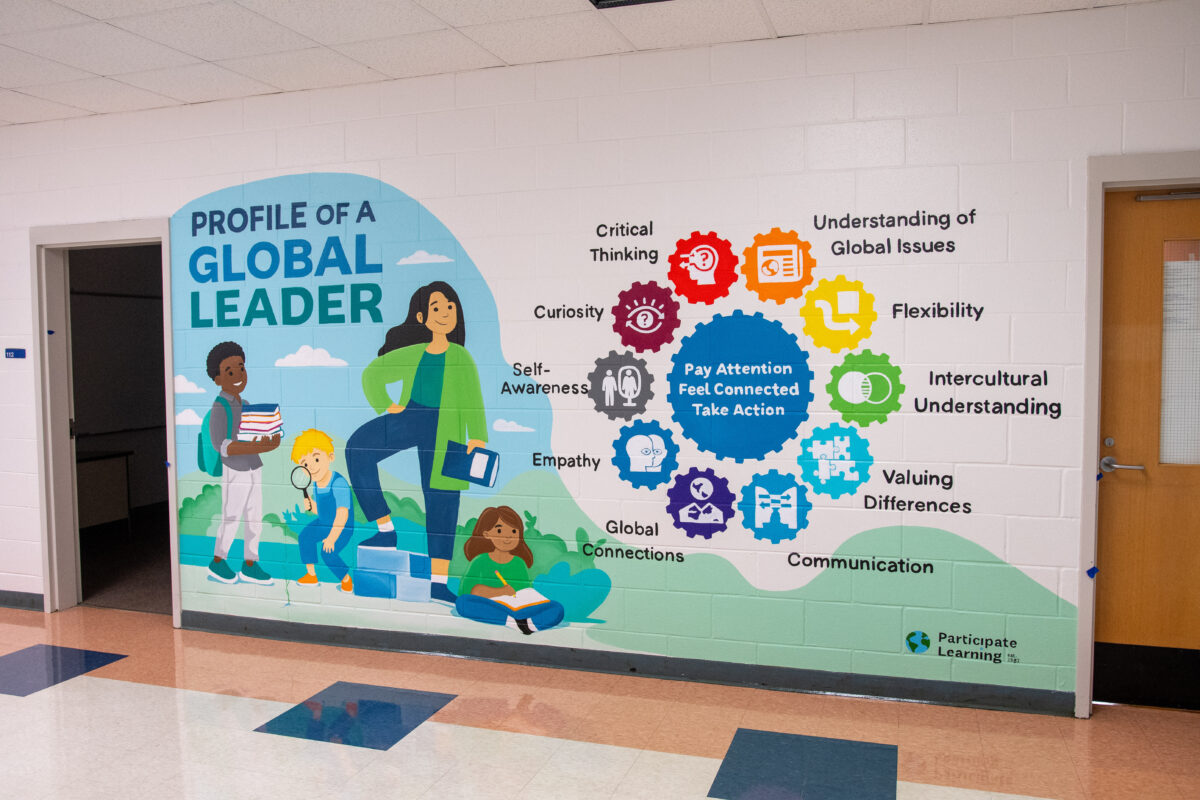
This peer-learning structure took shape in the course of these schools’ work with Participate Learning’s Global Leaders, a school-wide career-readiness framework where real-world learning connects everything: teachers develop students’ essential skills through action-driven learning projects with community partners, grounding academic standards in work that matters beyond the classroom. By sharing their thinking rather than facing the task alone, each school brought what it was learning back home and adapted it to their own community’s priorities.
Though more staff, more time, and more money are on every school’s wish list, none of those elements were needed in the three classroom stories that follow.
When career research becomes a personal decision: One economics standard produced real career clarity
At Ashe Early College, Honors Economics and Personal Finance (EPF) teacher Stefan Kunz designed a project around a question already part of the curriculum: how does postsecondary education and training connect to the income, career, and life a student actually wants? From there, he extended students’ research into a global comparison, asking them to weigh the cost of education against career return on investment around the world.
Students picked a career pathway to research, such as user experience (UX) designers, nurses, and dental hygienists. They dug into the specifics of each, such as training length, cost, career trajectory, and salary growth potential. Using their findings, they created short presentations, videos, or posters to show to younger students at their school.
One student reconsidered becoming a NICU doctor after learning through her research about the length of training required. Another student gained a checklist: she learned the essential questions to ask before committing to any career, from job security to training requirements.
Through the EPF presentations, younger students at the school learned the specifics to consider when planning their future careers, so they can make more informed choices earlier.
When student stress data informs school policy: One math class, not enough sleep
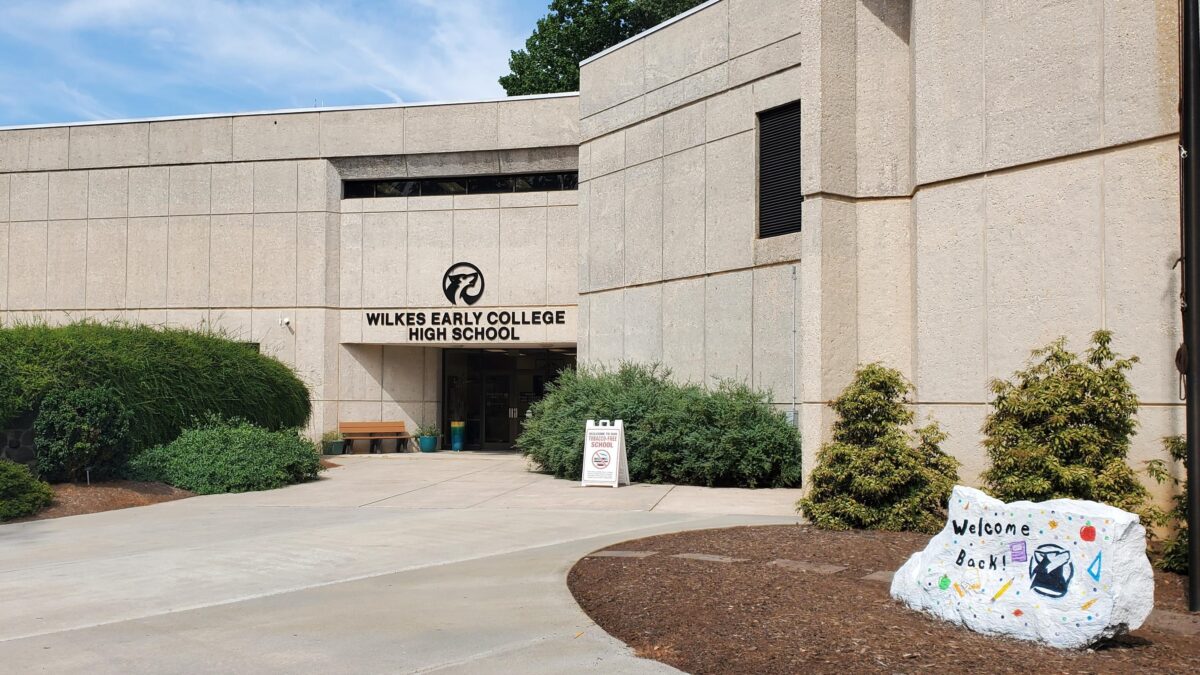
At Wilkes Early College, Math 4 Honors teacher Amber Roark built a project around the question, What can schools actually do to support students’ stress levels and minimize their social media use?
Students designed a survey, distributed it school-wide, and analyzed the results themselves using measures of center and variability: the same statistical tools the course standards require them to master. In that survey, 78% of students said school affects their sleep schedule, and of the factors keeping them up, 66% pointed to homework and 59% pointed to social media.
The math students then used those findings to become teachers themselves. They designed short peer-led lessons on strategies for coping with stress, from journaling and goal-setting to breaking down workload.
Taking the work outside their own classroom, they shared the lessons and underlying data with fellow students across the school. That information also carried into a School Improvement Team meeting, the principal’s meetings, and a counselors’ meeting, with plans to bring the findings to Summer Bridge and Open House for families to see as well.
When persuasive writing becomes community action: How an English class found real solutions to disaster recovery
More than a year after Hurricane Helene ravaged the Southeastern United States, Madison County is still rebuilding what was lost to the storm, including the library, courthouse, post office, wastewater treatment plant, and two town halls.
At Madison Early College, English teacher Julie Young built a two-semester project around the ongoing recovery. In the fall, during her rhetorical strategies unit, students researched local organizations addressing issues such as homelessness and food insecurity. Applying what they learned about ethos, pathos, and logos–the core strategies of Aristotle’s rhetorical triangle–students created a “pitch” for a project to support their work, which they delivered as a TED-style talk, podcast, or video. In the spring, the class voted on which pitches to carry forward into an actual event.
One group pitched “Hammocks for Homeless,” researching low-cost designs with specifications for elevation, insulation, and heat retention, then shared their proposal directly with Haywood Street, an Asheville congregation supporting unhoused residents.
A second group partnered with the Community Housing Coalition of Madison County (CHC) to rebuild homes for elderly and disabled residents on fixed incomes. They created outreach materials—flyers, videos, social media campaigns—and organized service days working alongside CHC staff on repairs.
A third group’s pitch supported Beacon of Hope, a food assistance nonprofit that operates its own thrift store. Students fundraised for a fashion show, promoted by the local news, then collected nonperishables and raised money for the organization. Anna Ofsa-Anderson, the manager of Beacon of Hope’s thrift store, called the students’ work “inspiring.”
One framework, infinite applications
In Bridge the Gap 2025, Fredricks says, “You can increase engagement by making changes to both the social and the academic context. [So] engagement is malleable.”
These three schools show what that malleability looks like in practice, growing out of a framework flexible enough to leave room for it. Given everything schools already have on their plates, that kind of flexibility lets teachers build on the curriculum, priorities, and community they already have, adapting the framework to fit their own context instead of adopting something separate from it.
That’s why the same overarching approach could produce three entirely different projects: students learned the power of rhetorical devices while crafting persuasive pitches, mastered statistics concepts while studying their own student body data, and performed a cost-benefit analysis of investment and return as it related to their future careers.
Teachers changed the academic context by pointing existing curriculum at real community problems. They changed the social context by creating real audiences such as nonprofit leaders, younger students, and decision-making teams, instead of imaginary ones. With those changes, engagement increased and learning deepened.
Rather than wishing for more time, money, or staff, these schools tapped into the resources they already had, directed their curriculum outward into the community, and created space for their students to do what every school aspires to: develop students who see a problem and take action to solve it.
See how Global Leaders could work across your district.
Download From Career to Classroom: The Global Leaders Advantage to learn more about the framework.