You’ve probably been researching for a while. You’ve read the same program descriptions enough times that they’ve started to blur together, every agency promising comprehensive support, meaningful exchange, a once-in-a-lifetime experience. And you still don’t quite know who to trust, or whether the J-1 visa application process is something you can actually navigate from where you are right now.
Start with the program itself. Once you understand how the J-1 visa process works for teaching, you’ll be in a much better position to evaluate the agencies running it.
What is the J-1 visa teacher program?
The J-1 visa is a non-immigrant visa issued by the U.S. Department of State. For teachers, it falls under the BridgeUSA Exchange Visitor Program, a federal cultural exchange initiative that allows qualified international educators to teach full-time in accredited U.S. primary or secondary schools, kindergarten through twelfth grade, for up to three years. Teachers in good standing may apply for a two-year extension, bringing the maximum stay to five years.
“Non-immigrant” means the J-1 visa is not a pathway to permanent residency. At the end of your program, you’re expected to return to your home country. Most exchange teachers must also meet a two-year home-country residency requirement before repeating the program or applying for certain other U.S. visas.
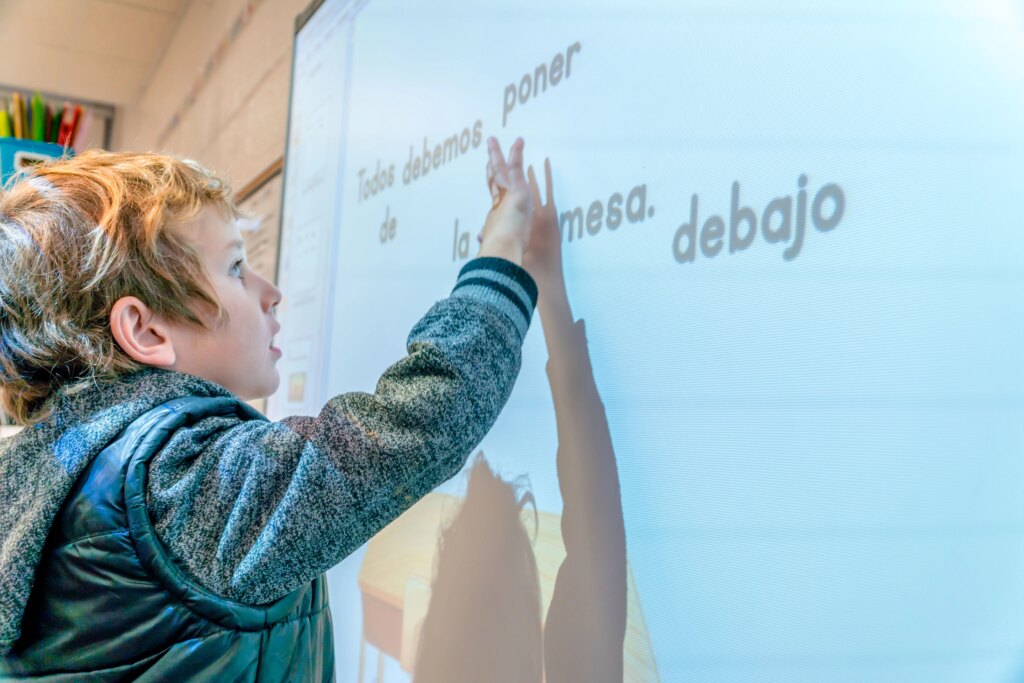
What separates the J-1 from other work visas, like the H-1B, which sponsors long-term employment, is its emphasis on cultural exchange. You’re not simply filling a classroom vacancy. You’re bringing your country’s perspective into a U.S. classroom, and the students in that room, many of whom have never traveled internationally, experience that directly. Cultural exchange is at the core of the program’s purpose.
Do you qualify? J-1 teacher visa eligibility explained
To be eligible for the J-1 teacher visa, the U.S. State Department requires:
- A qualifying degree: a degree equivalent to a U.S. bachelor’s in education or the subject you’ll teach.
- Teaching experience: be a current teacher with at least two years of full-time experience, have completed an advanced degree in the last year, or have two or more years of full-time teaching experience in the past eight.
- Subject-area qualifications: qualifications to teach at the primary or secondary level in your home country and meet the teaching standards of the U.S. state where you’ll be placed.
- English proficiency: English proficiency to teach confidently in a U.S. classroom and communicate with students’ families.
- Non-immigrant status: be a non-U.S. citizen and not a permanent U.S. resident.
For full eligibility details, visit the BridgeUSA website. You can find more on education and certification requirements here.
How the J-1 teacher visa application process works
The application has a clear sequence. What makes it manageable—or overwhelming—depends largely on the sponsor you choose.
- Find a designated J-1 sponsor. The U.S. State Department authorizes specific organizations to run exchange programs and issue the documents you need. These sponsors screen applicants, facilitate placements, manage visa compliance, and, if they take their role seriously, stay with you throughout your time in the U.S. The sponsor you choose is the single most consequential decision in this process.
- Submit your application. You’ll provide details on your teaching experience, educational background, country of residence, and any family members accompanying you. Requirements vary by sponsor.
- Interview. If your application is accepted, you’ll be invited to an interview, typically virtual. At Participate Learning, it’s a live video conversation.
- Apply for your J-1 visa. Once you accept a placement, your sponsor issues a DS-2019, the Certificate of Eligibility for Exchange Visitor Status, which allows you to apply for your J-1 visa at a U.S. embassy or consulate. Your sponsor should guide you through every document in this step.
Fees: Expect two required government fees: the $220 SEVIS fee, paid to the U.S. Department of Homeland Security, and a $185 visa application fee, paid through your U.S. embassy or consulate. Some sponsors also charge their own program fee; Participate Learning does not charge teachers to apply or participate. You can review estimated expenses here.
Documents you’ll need:
- Valid passport from your home country
- Degree certificates and transcripts
- Teaching certification or license
- English proficiency scores (TOEFL or IELTS, if applicable)
- Letters of recommendation
Processing times vary by country and embassy.
What will you actually earn—and what about U.S. taxes?
Before you apply, you should know two things: what you’ll earn and how U.S. taxes will affect your income. These are among the most important practical questions teachers have, yet many program guides bury the answers or skip them altogether.
J-1 teachers receive the same salary and benefits as domestic teachers with equivalent qualifications at the same school. That’s a parity requirement enforced by the U.S. Department of State, not something that varies by sponsor. What you actually earn depends on the district and its salary schedule. Ask your sponsor which states and districts they work with, and what the typical range looks like for your subject area and experience.
Taxes are more complicated. The specifics vary by country and situation, so getting guidance before your first paycheck matters. Participate Learning partners with certified tax specialists who work directly with the teachers we sponsor, Ambassador Teachers, on U.S. tax filings and help district payroll teams navigate the requirements.
What to look for in a J-1 sponsor
Most sponsors look the same on paper. The difference shows up after you land.
Some sponsors handle your visa and placement, then move on. Others stay—someone to call when something goes wrong at school, when paperwork doesn’t make sense, when the adjustment is harder than you expected. Ask these questions before you sign anything.
Does someone guide you through the application, or just hand you a portal?
At Participate Learning, you get a dedicated admission specialist. They walk you through every document, answer questions, and stay with you until it’s done.
The support system of Participate Learning from admission to trainings to visa interviews, until boarding, and upon arrival is so great; it’s superb. All you have to do is execute it.
Yves, Participate Learning Ambassador Teacher
Is there local support before you arrive?
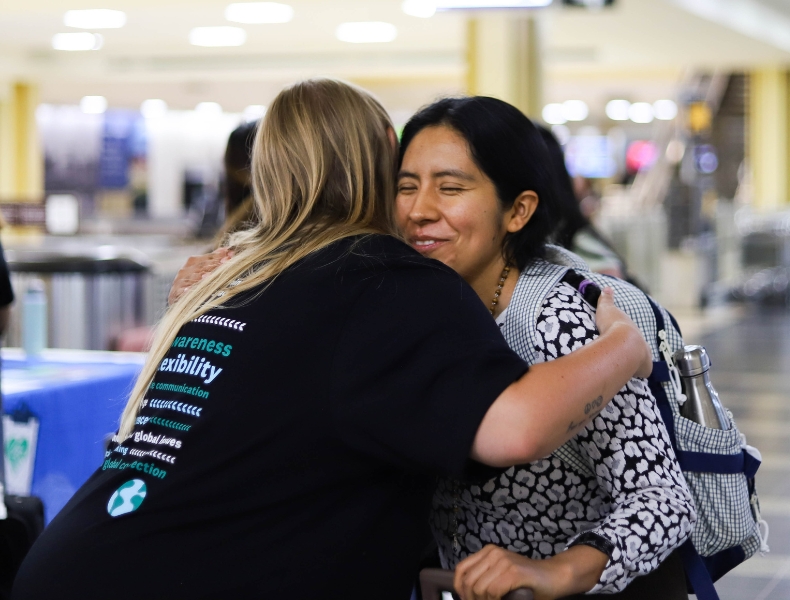
Yes. Participate Learning pairs you with a current Ambassador Teacher in your area—someone who knows the neighborhood, what to pack, where to open a bank account.
Participate Learning provided opportunities for us to meet with active teachers already in the program…And [they] connected us with a local advisor I was in touch with before I even came here.
Regina, Participate Learning Ambassador Teacher
What happens after placement?
The support doesn’t stop at your DS-2019. You get:
- 24/7 access to a Teacher Resources team by phone, email, and community forum
- Instructional specialists who visit your classroom in your first term
- Ongoing coaching and professional development
- When something goes sideways, there’s a specific person to call.
Do they charge teachers a program fee?
Many sponsors do. Participate Learning does not.
What do current teachers say?
Moving abroad is hard. But I can tell you—you are going to be supported all the way. Participate Learning has so many things in place to make you feel supported.
Yamina, Participate Learning Ambassador Teacher
How long is the J-1 teacher visa valid?
Up to three years, with a two-year extension available for teachers in good standing—five years total.
What happens at the end?
You return home. Most J-1 teachers are also subject to a two-year home-country presence requirement, meaning you must live outside the U.S. for two years before returning on another J-1 or applying for certain other visa categories. This is the rule teachers most often misunderstand. It doesn’t mean you can never return. It means there’s a mandatory gap, and the clock starts when your program ends.
Can you bring your family?
Yes. Spouses and unmarried children under 21 can join you on a J-2 dependent visa. J-2 holders may study and apply for work authorization, though processing takes about three months after arrival. Plan financially before they join you; your teaching salary may not cover all family expenses. Participate Learning’s estimated expenses page can help you think through costs before you arrive.
Where do J-1 teachers get placed?
Public, charter, and private K–12 schools across the U.S. Common subjects include math, science, world languages, ESL, special education, elementary education, social studies, art, and music. See Participate Learning’s placement areas.
What does support look like after arrival?
Placement is not where the support ends. It’s where it begins.
At orientation, Ambassador Teachers open a U.S. bank account with a partner bank and leave with a debit card the same day. In the first term, Instructional Specialists visit classrooms and offer individualized feedback. Strategy coaches provide ongoing check-ins throughout the year. If a school issue arises that you don’t know how to navigate, there’s a person who advocates for you.
You’re not alone. You are supported 100%. Anything that I need at any point—I send one email, and I get five responses.
Kim, Participate Learning Ambassador Teacher
These are the details that separate a teacher who spends two years figuring everything out alone from one who never had to.
What difference does the right sponsor make after you arrive?
Participate Learning has partnered with K–12 schools and districts since 1987 and sponsored over 18,000 international educators through the BridgeUSA J-1 Exchange Visitor Program. Last year, 93% of Ambassador Teachers renewed their contracts, a figure that reflects whether teachers actually felt supported, not just placed.
The J-1 visa teacher program gives you the pathway. Your sponsor determines what happens inside it—whether you land somewhere with a person already waiting to help you, or whether you navigate it alone.
If you’re ready to learn more, explore Participate Learning’s Ambassador Teacher program—open positions, the application process, and what to expect.