In language immersion classrooms, learning often unfolds in small, meaningful moments—a gesture paired with a new word, a student taking a quiet risk to answer in a new language, classmates helping one another find the right words.
At Participate Learning, dual language programs are built around those moments. These programs help students grow academically while learning how to engage with the world with curiosity, confidence, and care for others.
Below, we answer ten of the most common questions district and school leaders ask when considering a dual language immersion program.
What Are the Benefits of Language Immersion Programs for Students?
Language immersion programs support the whole child—academically, socially, and emotionally. As students grow in another language, they also grow in how they think, how they relate to others, and how they see their place in the world.
Academic and Cognitive Advantages
In immersion classrooms, students learn math, science, and reading through another language. This daily practice helps strengthen focus, memory, and problem-solving skills. Research shows that students in language immersion programs often meet or exceed the academic performance of their peers in English-only classrooms, including on standardized tests in English.
Teachers also notice that immersion students become more comfortable when things feel unfamiliar. They learn to listen carefully, look for clues, and try again when something doesn’t make sense right away. These skills support learning in every subject.
Cultural Competency and Global Readiness
Language immersion programs give students the chance to experience culture as something lived, not just read about. Through daily interactions with native-speaking teachers, students see how language connects to traditions, values, and everyday life.
These experiences help students build empathy and respect. They learn that people communicate and see the world in different ways and that those differences matter.
Career Readiness and Professional Advantages
The impact of dual language extends well beyond elementary school. Students who develop bilingual and biliterate skills have access to more academic and career opportunities later in life. Many employers value professionals who can easily collaborate with others, adjust to new situations, and communicate clearly.
Just as important, immersion students build confidence. Learning two languages shows them they can take on challenges and succeed, even when the work feels hard at first.
What Is the Difference Between a 90:10 and a 50:50 Model?
Dual language program models are designed to meet the needs of different school communities. Both models support strong academics and bilingual growth. The main difference is how much time students spend learning in each language.
The 90:10 Full Immersion Model
In a 90:10 model, students receive 90 percent of their instruction in the target language, such as Spanish or Mandarin, and 10 percent in English. Over time, the amount of English instruction increases, usually reaching about 75 percent target language and 25 percent English by fifth grade.
This model works well in communities where most students speak English outside of school. Because students continue using English at home and in their community, they can spend more time building skills in a new language during the school day.
The 50:50 Immersion Model
In a 50:50 model, instruction is split evenly between English and the target language throughout the program. This approach often works well in schools where students come from both English-speaking and Spanish- or Mandarin-speaking homes.
In these classrooms, all students have chances to be learners and leaders. Students see their home language valued while also building skills in a new one.
Why Are There Multiple Language Immersion Models?
There is no single path to becoming bilingual. Research on language learning shows that students learn best when instruction reflects their language experiences and builds on what they already know.
Research-Based Foundations
Both 90:10 and 50:50 models are based on research showing that regular exposure to two languages supports academic success and language growth. The main difference is how that exposure is organized over time.
Some students benefit from early, intensive exposure to a new language. Others do better with a more balanced approach that develops both languages side by side.
Community-Centered Design
Immersion programs are strongest when they reflect the communities they serve. Schools with mostly English-speaking students may focus on increasing time in the target language. More linguistically diverse schools may choose models that support and grow multiple home languages.
Having more than one model allows schools to design programs that feel welcoming, responsive, and sustainable.
Flexibility with Purpose
Across all models, the goal is the same. Students learn to think clearly, learn deeply, and communicate in more than one language, while meeting the same academic standards as their peers.
Is Language Immersion Appropriate for Students of All Language Backgrounds?
A common misconception about language immersion programs is that they only work well for English-speaking students. In reality, immersion can be a strong option for students who speak any language at home.
In many areas of the United States, English is the main language students hear and use outside of school. Because of that, English-speaking students can spend more time learning in Spanish or Mandarin during the school day without losing English skills. Their English continues to develop through daily life, reading, media, and community interactions.
In communities where students speak Spanish or Mandarin at home, a 50:50 model is often a good fit. In this model, students who speak English at home and students who speak the target language at home are both immersed in a second language for part of the day. This creates a classroom where students take turns being learners and language models, depending on the language of instruction.
Regardless of the model, language immersion programs are designed to support students of all language backgrounds, not replace English with another language. When implemented well, immersion programs value students’ home languages and help all learners grow as confident, capable bilinguals.
How Do Language Immersion Programs Integrate with Other School Programs?
Strong immersion programs are part of the larger school community. They work best when they are connected to a shared vision that values students’ languages, cultures, and identities. Schools that anchor immersion within broader global learning efforts create coherence across classrooms, using shared concepts and experiences to unite the entire school.
How Can Instructional Integrity Be Maintained in a Language Immersion Program?
Immersion students learn the same academic content as their peers and take the same state-required assessments. The difference is the language used for instruction, not what students are expected to learn.
Maintaining strong instruction requires aligned curricula, regular checks on student progress, and ongoing support for teachers. When educators receive coaching, collaboration time, and professional learning, immersion classrooms remain engaging and academically strong.
How Can Students Learn When Instruction Happens Mostly in a New Language?
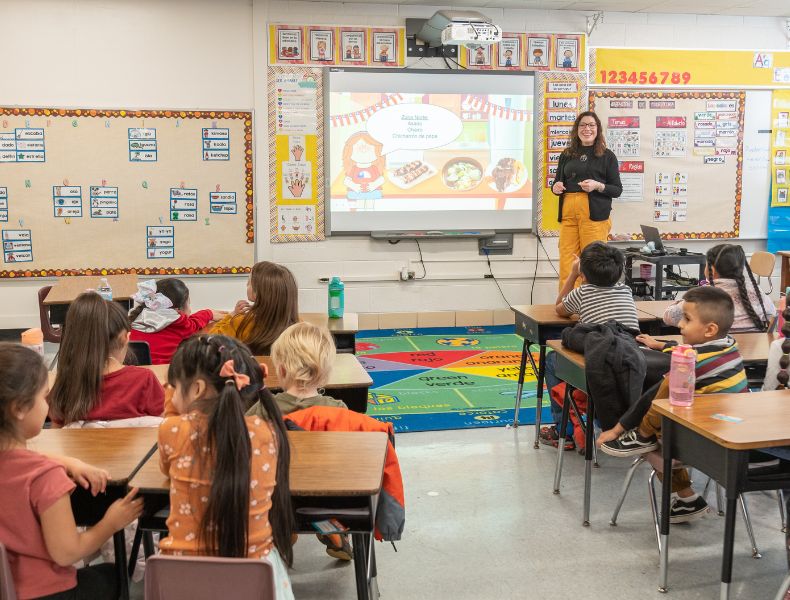
In immersion classrooms, teachers rely heavily on visuals, gestures, modeling, and repetition at the start—particularly for kindergarten students who are just beginning their language journey. Students are not expected to understand every word right away.
They learn by watching, listening, and participating. As their language skills grow, teachers shift their approach, using more spoken and written language as students become increasingly confident and independent.
With clear routines and supportive teaching, students quickly learn that understanding comes from experience, not translation.
Do Students Follow State Curriculum Standards in Language Immersion Programs?
Yes. Students in immersion programs follow the same state-approved academic standards as students in traditional classrooms. They also take the same assessments. The target language is not an extra subject—it is the language used to teach subjects like math, science, and reading.
What Makes a High-Quality Language Immersion Program?
High-quality immersion programs share several key features that support strong learning and long-term success.
Native Speaker Expertise
Students benefit from learning with teachers who are native speakers of the target language. These teachers bring authentic language use and cultural knowledge into the classroom, helping students hear and use the language in meaningful ways.
Authentic Cultural Integration
Strong programs include culture as part of everyday learning. Students explore traditions, current events, and perspectives from around the world, helping them understand how language and culture are connected.
Comprehensive Support Systems
Successful programs invest in teacher learning, student assessment, and family communication and engagement. Ongoing support helps ensure strong instruction and keeps everyone informed and engaged throughout the immersion journey.
Is a Dual Language Program the Best Solution?
Strong programs begin with a thoughtful foundation. Before moving forward, school and district leaders may benefit from considering these key elements that support long-term success.
Family Support and Shared Understanding
For families, enrolling a child in a dual language program often brings both excitement and questions. In the early years, students may mix languages or hesitate before participating as they adjust. When families understand that these moments are a natural part of immersion and feel informed along the way, they are better able to support their children and the program.
Teacher Recruitment That Includes Native Speakers
Because recruiting bilingual teachers can be challenging, especially with native or native-level language proficiency, planning early makes a difference. Thoughtful recruitment and retention help ensure students experience consistency and confidence in language instruction.
Curriculum and Instructional Materials
Teachers do their best work when they have the right tools. In dual language programs, that means having curriculum and materials designed for instruction in the target language—not materials that must be translated or adapted as they go.
When districts or schools select high-quality materials ahead of time, teachers can focus on instruction, relationships, and student growth.
Dedicated Program Leadership
Behind every strong language immersion program is someone paying close attention to how it’s unfolding. Professional learning, assessment, and program quality all require time and coordination.
Schools that identify a person or a trusted partner to support program leadership are better able to respond to challenges and maintain consistency over time. This steady guidance helps teachers feel supported and keeps the program aligned with its goals.
Ongoing Professional Development
Dual language teachers benefit from professional development designed specifically for their unique classrooms. Because dual language instruction looks different from traditional ESL or world language teaching, teachers do their best work when they have access to learning that addresses the particular challenges and opportunities of immersion environments.
Ongoing, specialized professional development helps teachers refine their practice, support all learners, and grow more confident in their roles—ultimately strengthening the entire program.
Support from Participate Learning
For more than 15 years, Participate Learning has partnered with schools and districts as they build dual language immersion programs. Through that work, we’ve seen what makes the difference over time: sustained support that helps teachers and administrators grow confident in their practice and create classrooms where language learning can truly thrive.
We built the Dual Language Mastery Program from those experiences so schools across the country can benefit from what we’ve learned. Through the program, we work alongside teachers and administrators with flexible learning paths and practical guidance—meeting them where they are and supporting them as they strengthen instruction, make informed program decisions, and build dual language programs that serve students and families for the long term.
Partner with us today for your dual language needs.