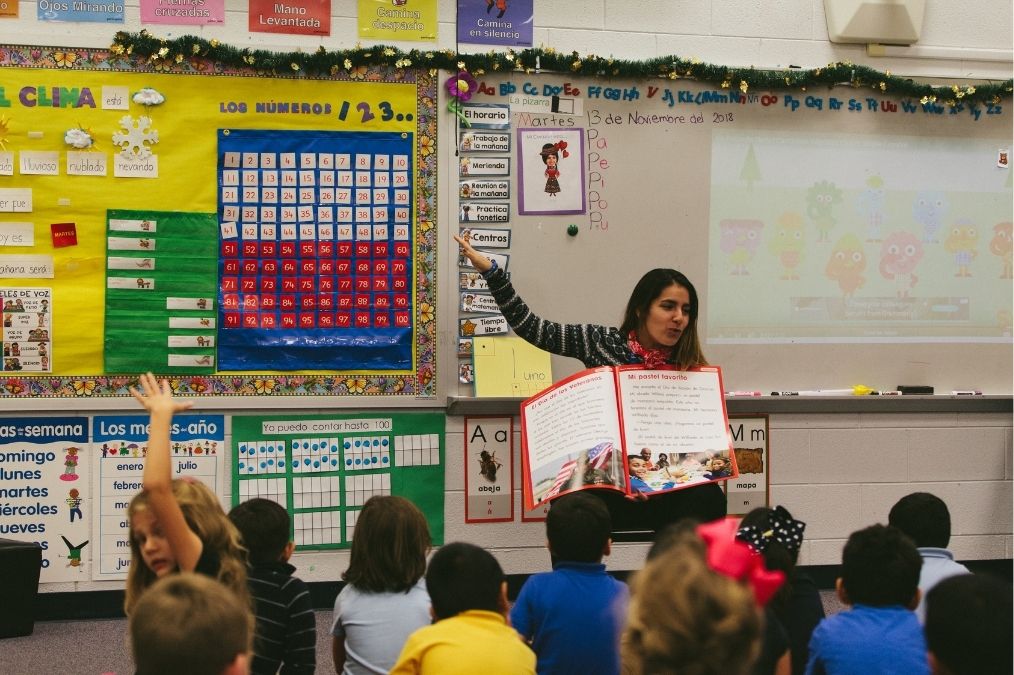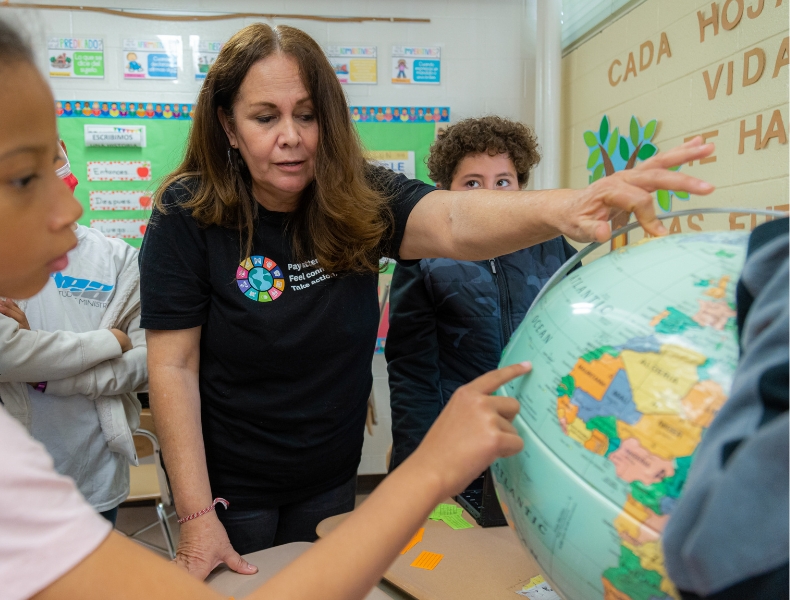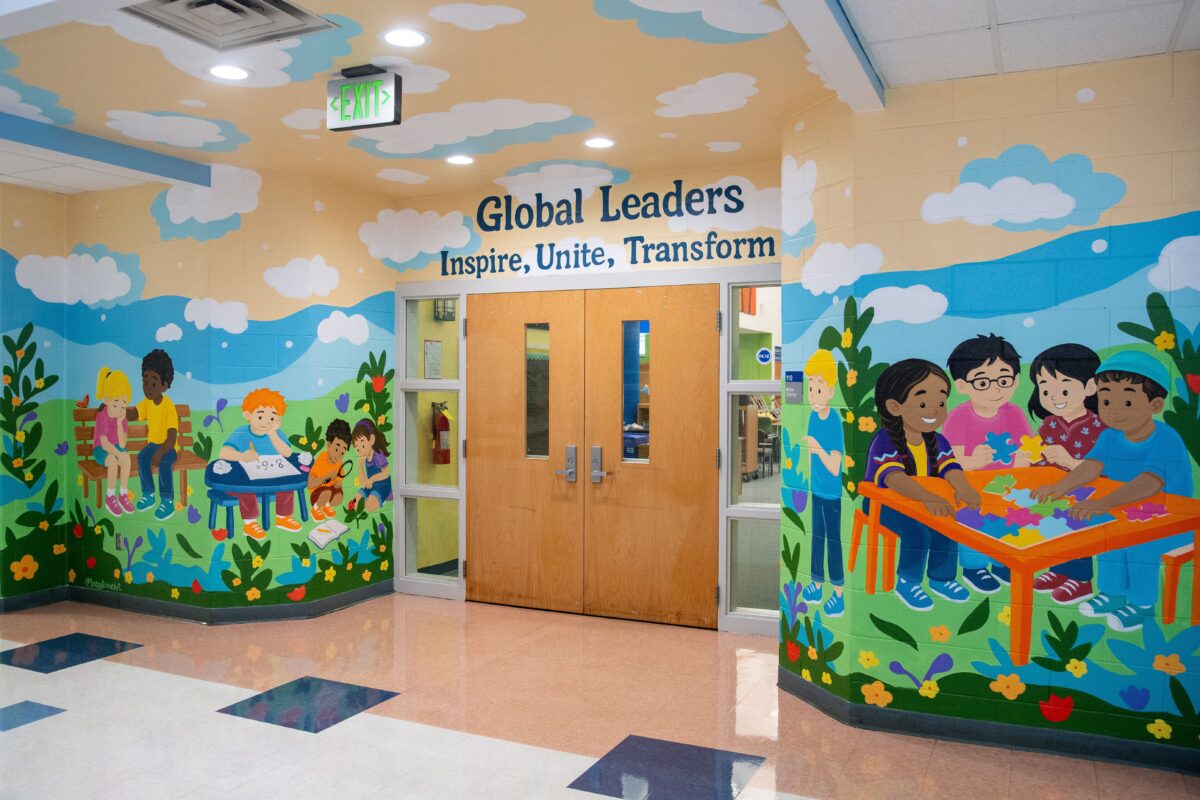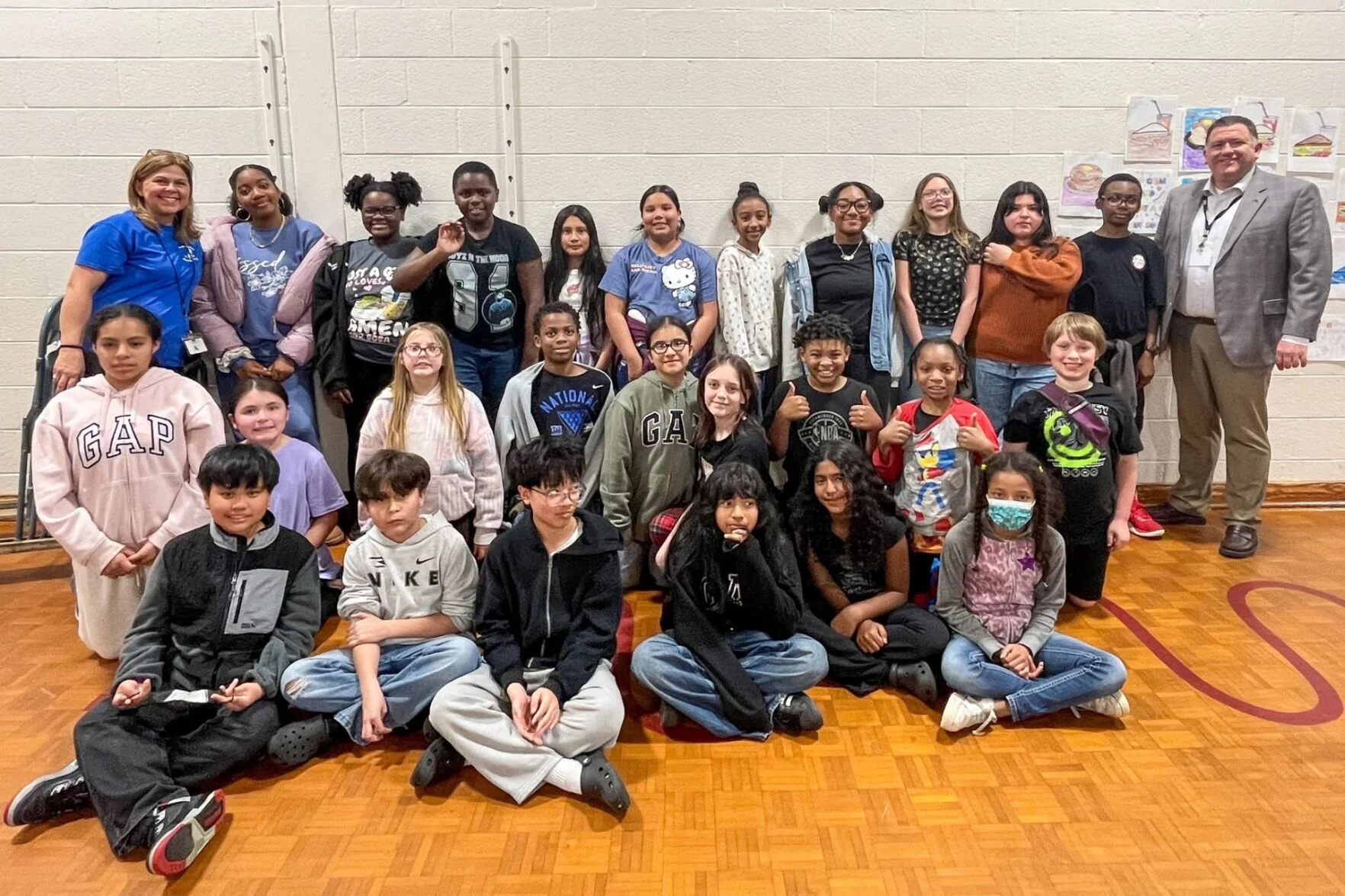
At South Graham Elementary School (Graham, NC), a unit on hunger started with a question: What can we do to help? What followed was a scalable model for global learning that increased student engagement, deepened understanding, and nearly tripled the school’s impact in one year.
Like many schools, South Graham was looking for ways to make learning more relevant and engaging for students. Global issues like hunger provided a meaningful entry point, connecting academic standards to real-world challenges students could understand and care about.
For many students, however, topics like poverty, hunger, and environmental sustainability can still feel distant and abstract. Global learning bridges that gap by helping students connect those issues to their own lives and communities
At Participate Learning, we believe that connection is what turns learning into action. As students explore real-world challenges, apply academic learning, and take action, they build essential skills for life and career readiness. Students learn to:
- Think critically and solve complex challenges
- Collaborate and communicate across perspectives
- See themselves as capable of creating meaningful change
Year 1 (2025): Building understanding and taking action
During the first year of the initiative on hunger, teachers at South Graham Elementary School—a Global Leaders partner school for nearly a decade—focused on building understanding before asking students to act.
Students examined hunger from multiple perspectives. Using a shared anchor text, they explored how food insecurity affects individuals, communities, and systems. In small groups, students created thinking maps to organize their observations and deepen their understanding.
As learning progressed, the school invited its students to use music as a creative outlet to explore the question, “What can we do to help fight hunger?” Each grade took a unique approach, blending performance with purpose.
First-, third-, and fifth-grade students wrote their own song lyrics, with one class even composing an original melody. That class’s song, “We Can All,” delivered an uplifting message of unity and shared responsibility to end hunger, enhanced by student-choreographed dancing. Another group adapted a familiar tune to tell a story about food insecurity, inviting their audience to reflect and respond.
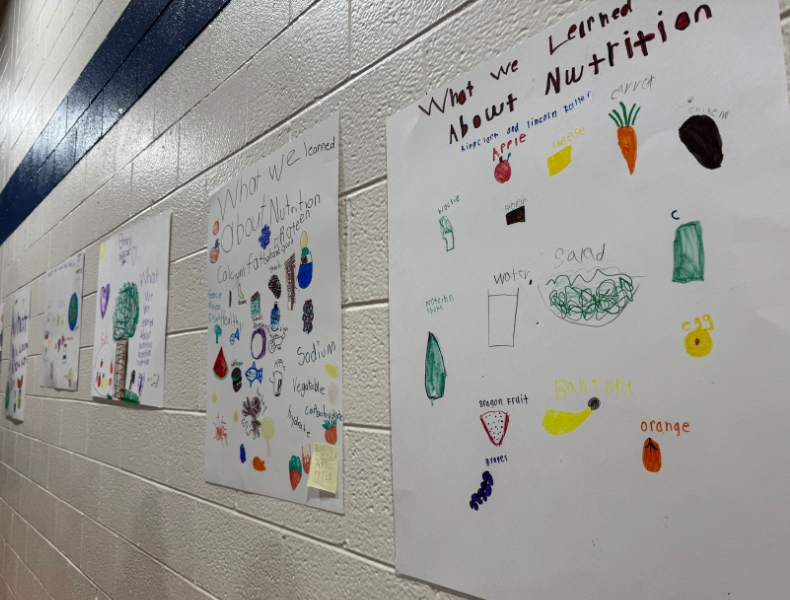
The first year of the initiative culminated in a schoolwide assembly where performances brought the learning to life. Around the school’s gym, student-created posters explored everything from nutrition to the global causes of hunger, turning research into visual stories that informed and challenged their audience.
The assembly marked a shift from classroom learning to shared understanding and returned students to the original question: What can we do to help?
Now that students had built understanding, they were prepared to take action.
South Graham Elementary School organized a schoolwide food drive as the real-world connection to their learning, collecting 627 nonperishable food items to donate to a local food pantry.
The first year revealed a key insight: when students build understanding before taking action, engagement deepens and impact becomes more meaningful.
Year 2 (2026): From one-time event to sustainable model
Teachers and school leaders used that insight to redesign the experience for the following year.
In March 2026, South Graham Elementary School launched “No Hunger Month,” a structured, schoolwide initiative that shifted the previous year’s food drive from a one-time event to a repeatable, scaleable model.
The approach included consistent, schoolwide exploration of hunger as a global issue, integration across content areas, and a clear progression from learning to action. As alignment increased, the learning deepened.
Students continued to build understanding through research, discussion, and reflection. Teachers across subjects reinforced the same focus, connecting academic content to a real-world issue and preparing students to respond.
Results: deeper learning, greater impact
The second year produced measurable growth. By the end of “No Hunger Month,” students and staff had collected 1,773 nonperishable food items. The donations supported both the school pantry and a local community partner, Harvest Baptist Church.
The outcome nearly tripled the previous year’s total.
Why building understanding before action leads to better results
Two years of implementation at South Graham Elementary tell a clear story of moving from an event to a system:
- Year 1: A meaningful learning experience connected to action
- Year 2: A structured model that increased both learning and impact
Teachers began with understanding instead of action. Students built context, asked questions, and developed empathy before responding. By the time students acted, participation was grounded in purpose.
This sequence—understand, connect, act—drives stronger outcomes because each step builds on the previous step.
A model schools can replicate
South Graham Elementary School demonstrates how to build sustainable global learning programs.
A strong model includes:
- A meaningful question that anchors learning
- A shared instructional foundation across classrooms
- Integration across content areas
- Opportunities for students to apply learning through action
- Ongoing refinement over time
When the process repeats, both learning and impact grow.
Lasting impact
The results of South Graham’s actions didn’t go unnoticed. The school’s efforts drew attention from the local community, even generating interest in a local news story that highlighted both the scale of the food drive and the depth of student learning behind it.
What started as a classroom question became a shared initiative that reached beyond the school walls and into the community.
The work continues to start with the same question: What can we do to help?
Each year, the answer brings to life Margaret Mead’s infamous quote: “Never doubt that a small group of thoughtful, committed citizens can change the world. Indeed, it is the only thing that ever has.”
And if the past two years are any indication, next year’s total will be yet another example of what’s possible when students are empowered to act.
Interested in building a model like this in your school or district?
Partner with Participate Learning to design and implement global learning that aligns instruction, increases engagement, and drives measurable outcomes.
Header image source: Burlington Times-News