Superintendents are trying to solve a puzzle no previous generation of school leaders has faced. The industries, tools, and even job titles today’s kindergartners will work in are mostly unknowable right now, which makes “career readiness” a hard target to hit, no matter how well a school is doing.
Four in five hiring managers say high school graduates aren’t ready for work. It’s easy to read that as a report card on schools, but it indicates just how quickly jobs are changing. It’s nearly impossible to prepare students for a specific career if the required technical skills constantly shift, or if the jobs are replaced with something completely new.
To prepare career-ready students, the target needs to shift, too. Career readiness in K-12 education means building human intelligence skills–the durable, transferable skills all people need to succeed in any career and in any life–early and often: giving students real problems to solve, chances to lead, and a way to name the qualities they’re developing long before a career fair ever asks them what they want to be.
What skills actually matter: the ten competencies
When hiring managers list the skills they’re looking for such as critical thinking, communication, and adaptability, they’re describing the ten global competencies that schools–like the ones whose stories are told below–develop through real-world learning. These global competencies are the human intelligence skills that let a person read a situation, work with people who think differently, and lead with assurance even when there’s no roadmap.
Students know they’re building towards these competencies when they can say things like:
- I can solve tough problems. (critical thinking)
- I can understand and express myself with different kinds of people. (communication)
- I can adapt and learn from mistakes. (flexibility)
- I reflect on the people and experiences that have made me who I am. (self-awareness)
- I can see things from other people’s perspectives. (empathy)
- I genuinely want to learn about the world. (curiosity)
- I learn from people who are different from me. (valuing differences)
- I know that culture is a way of life that connects people, and that cultures have differences and similarities all over the world. (intercultural understanding)
- I am part of a larger world and I am responsible for it. (global connection)
- I understand the causes, impacts, and connections between issues like poverty, health, and hunger. (understanding global issues)
Unlike cramming for a test or having one single day of the school year set aside for a career fair, global competencies stick because they appear again and again. A student who develops critical thinking will use it in math class, in their first job, and in their role as a parent 20 years from now.
These are skills that don’t become obsolete; in fact, as technology advances and AI increasingly takes over manual tasks, they are even more essential because they endow people with abilities machines don’t and perhaps will never have: the ability to interpret nuance in conversations, read social situations, and navigate complex workplace dynamics.
When career readiness is embedded into learning school-wide, there’s a ripple effect of positive impact. Students develop the confidence to tackle unfamiliar problems, teachers who embed global competencies into instruction see their work as more purposeful, and communities build trust in seeing graduates who can do things, not just know things. When you’re recruiting and retaining students and teachers, purposefulness matters. In fact, it’s one of the strongest predictors of whether a student or teacher stays.
How schools build these skills
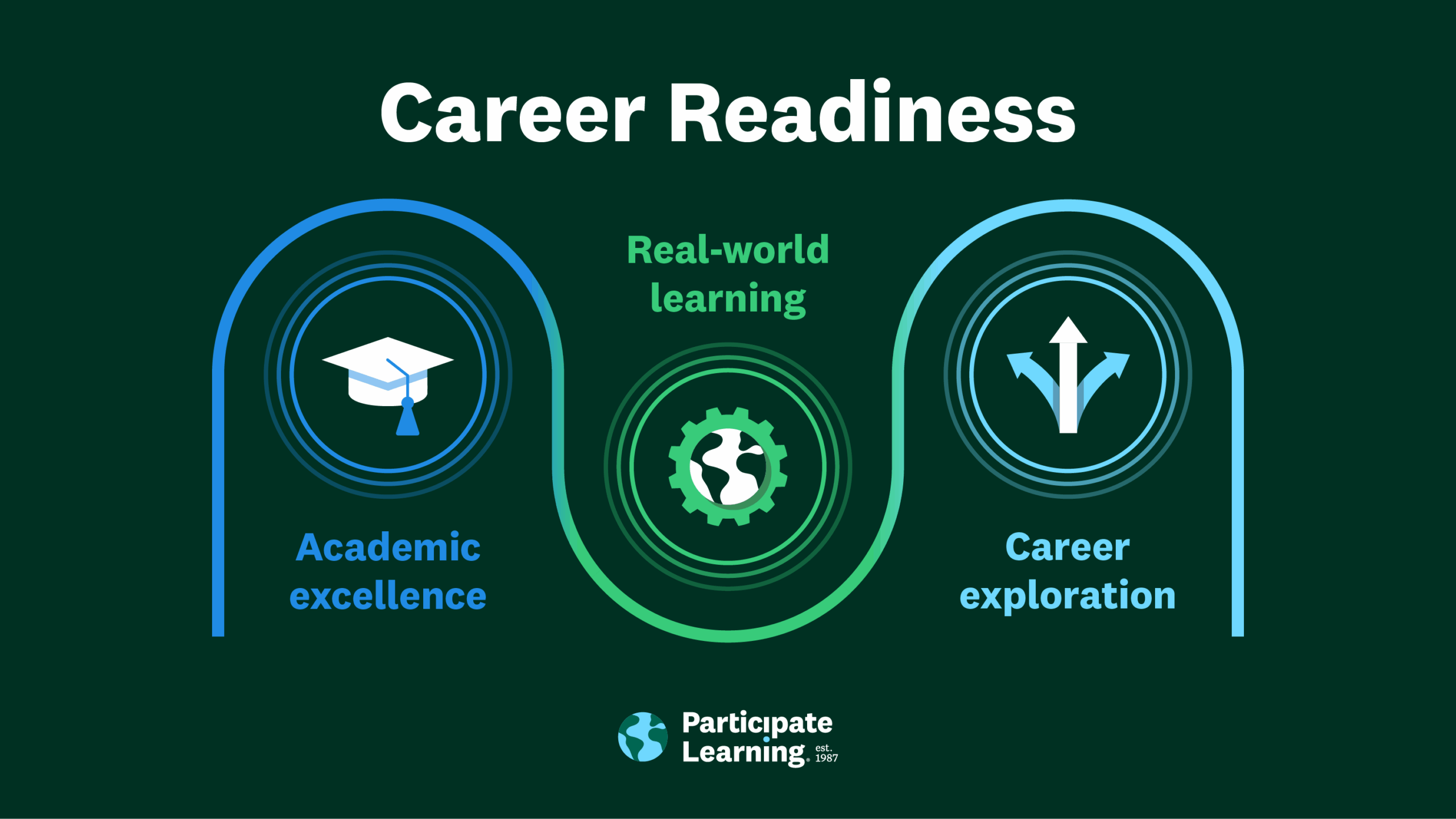
The strongest career readiness programs weave global competency development into existing instruction, rather than tacking it on as an awkward addition that students can sense feels less significant than the central curriculum. There are three main ways schools help develop human intelligence skills:
1. Anchor learning in real-world problems.
Connecting academic content to real-world relevance shows students how their knowledge has implications outside the classroom.
When students study water systems, they can do more than memorize the cycle; they could petition their town to be more disciplined about fining business that improperly dispose of their pollutants in local watersheds. When they study economics, they might use math to analyze the relationship between income and food deserts in their community. When they read and write in English class, they can craft persuasive letters about issues they actually care about: changing the school dress code, for example, or encouraging community members to foster dogs from the local animal shelter.
One way to achieve this is through action-driven learning (ADL). Students not only learn about a problem, but they also do something about it, in real time, at a level appropriate to their age and context.
ADL could look like organizing a school-wide campaign, advocating for a policy change, launching an initiative in their community, or improving a process. The key is that students research, design, implement, reflect, and revise, experiencing the full arc of professional iterative processes in the real world.
At Heritage Middle School (Burke County, NC), eighth-grade students noticed their school’s breakfast program used dozens of plastic bags every day—bags that ended up in the trash. Using this observation as a springboard for action, students researched the environmental impact of plastic waste, collected usage data, applied their findings in science and math, wrote proposals in ELA, and partnered with community leaders to pilot a change. Ultimately, they eliminated single-use plastics in their food services district-wide.
2. Build career exploration into everyday curriculum.
Many schools introduce career exploration through interest surveys, career days, and guest speakers. While these efforts have value, the best way to make a lasting impact is to weave exploration opportunities into how students learn throughout the year.
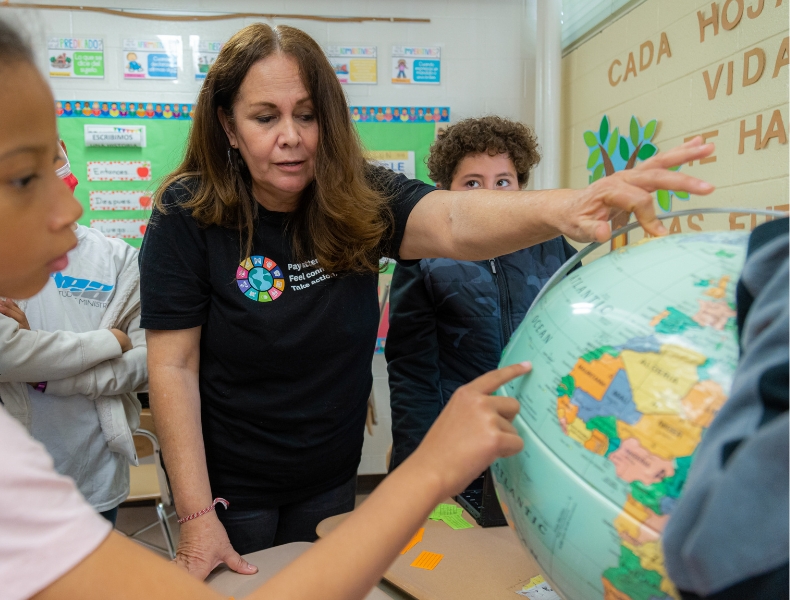
At Belvoir Elementary in Pitt County, North Carolina, a unit on global challenges included “Career Conversations” with local professionals: nurses, logistics coordinators, and public safety officers. These professionals shared how they rely on global competencies like flexibility, empathy, and clear communication every day, giving students a window into how real people solve problems, lead teams, and serve their communities. They served as living examples of how the skills students were developing matter in the world beyond school.
3. Achieve academic excellence through real-world learning.
Real-world learning isn’t separate from academic excellence. Real-world learning is a concrete representation of academic learning that brings lessons to life. By applying what they’re learning in class to something relevant outside of school, students build a deeper understanding of the concepts.
At Efland-Cheeks Elementary (Orange County, NC), math proficiency rose from 39% to 69% and reading proficiency from 28% to 57% in the years after the school began building this kind of learning into instruction.
Learn more about action-driven learning:
Why career readiness can’t wait
Three pressures are converging in many districts right now:
- Employers report that graduates lack the skills they need, and that gap is widening.
- Teachers don’t have the time, resources, or training to add career readiness into their existing work.
- Parents want evidence that their children are prepared for more than standardized tests: that they can problem-solve, lead, and apply what they learn after school ends.
Career readiness addresses all three when it’s embedded into how teachers teach, operating as a framework that scales rather than an initiative that fades.
Language immersion as a multiplier of developing human intelligence skills
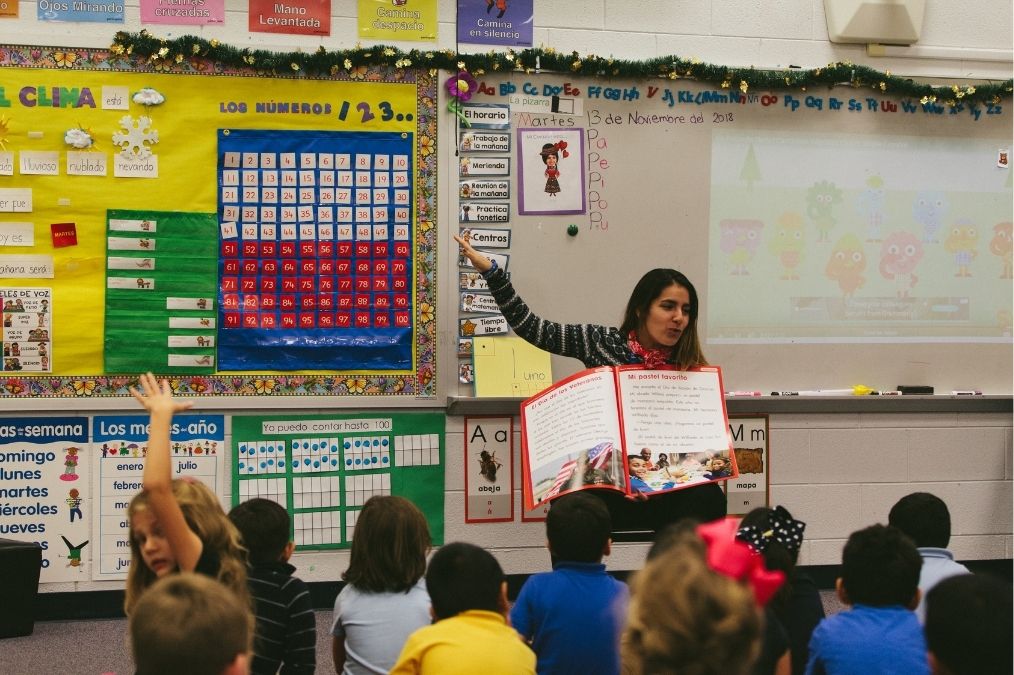
Schools with dual language immersion programs have a built-in advantage: the nature of language learning itself embeds all three career-readiness methods. Students reading and writing across languages, collaborating with peers from different linguistic backgrounds, and code-switching across contexts are simultaneously anchoring learning in real-world problems, building career exploration into everyday instruction, and practicing action-driven learning.
Research shows that students in dual language settings experience enhanced academic achievement, stronger executive function, and greater adaptability. For English learners, these programs provide space to strengthen their English while maintaining their home language, reinforcing identity, and promoting long-term success.
But the real power lies in how language immersion develops the cross-cultural communication and cognitive flexibility that the ten competencies require. A student reading literature in Spanish and English, collaborating with peers whose home language differs from theirs, and code-switching across contexts is actively practicing intercultural understanding and empathy in real time as a natural part of how learning happens.
This advantage shows up in outcomes: multilingual graduates have been shown to earn up to 20% more than monolingual peers, a reflection of how highly employers value bilingualism, especially in roles demanding empathy, collaboration, and communication across cultures. Recent research on math achievement in dual language immersion also found that DLI students were nearly 10 percentage points more likely to reach math proficiency than their peers.
At Fred L. Wilson Elementary and Jackson Park Elementary (Kannapolis City Schools, NC), integrating language immersion into career readiness came to life in a unit called “Detectivos del Cuerpo Humano” (Human Body Detectives). Students anchored their learning in a real-world challenge—understanding human body systems—while simultaneously building career exploration into instruction by interviewing a visiting neurologist and learning from professionals about health and wellness careers (practicing Zumba and learning about martial arts and physical health).
Then they took action-driven learning across disciplines: students dressed as doctors, nutritionists, and scientists, conducted a live bilingual exchange with peers from another school, asked and answered questions about the human body in Spanish, and applied language skills while practicing the communication and inquiry professionals use every day. In a single unit, they were building curiosity, critical thinking, and the cross-cultural collaboration that career readiness demands.
Building career readiness that lasts: the implementation pathway
Career readiness works best when it’s the result of a deliberate, school-wide shift in how instruction is organized and how teachers see their role.
Schools that have built sustainable career readiness programs share these practices:
- Align to existing goals: Embed the global competencies into existing improvement efforts or academic content that’s already being taught. Use morning announcements, student shoutouts, or teacher spotlights to celebrate when these skills show up in action.
- Create shared language: Develop a yearlong roadmap with monthly emphasis on one chosen competency and build routines across the school where teachers and students reference that month’s competency.
- Equip teachers to teach and assess: Offer professional development and planning time so educators can explore what these competencies look like in their content area and how to assess them in student work.
- Build shared leadership: Form a team of teachers, counselors, and administrators to guide how global competencies get embedded into learning experiences, and give that team ongoing planning time throughout the year.
- Make reflection part of the process: Use journals, portfolios, or discussion routines so students recognize when and how they’re using global competencies. Reflecting on their growth helps build metacognition, deepens learning, and lets students connect their strengths to future possibilities.
The schools building career readiness now aren’t waiting for a sudden influx of extra time, staff, or budget. They’re starting where they are, naming the skills their students are already developing, and giving those skills more room to grow.
If you’re mapping out what this could look like in your own schools, Global Leaders is built to give teachers a shared language, a visual blueprint, and a pathway for implementation.

Want to see what Global Leaders could look like in your school?
Download our guide, Career Readiness in K-12: A Framework for Implementation, which walks through the ten competencies, shows how they nest into existing instruction, and includes reflection templates and school-wide action planning tools.