At first glance, it looked like a simple virtual exchange between second-grade classes from two schools in the same district.
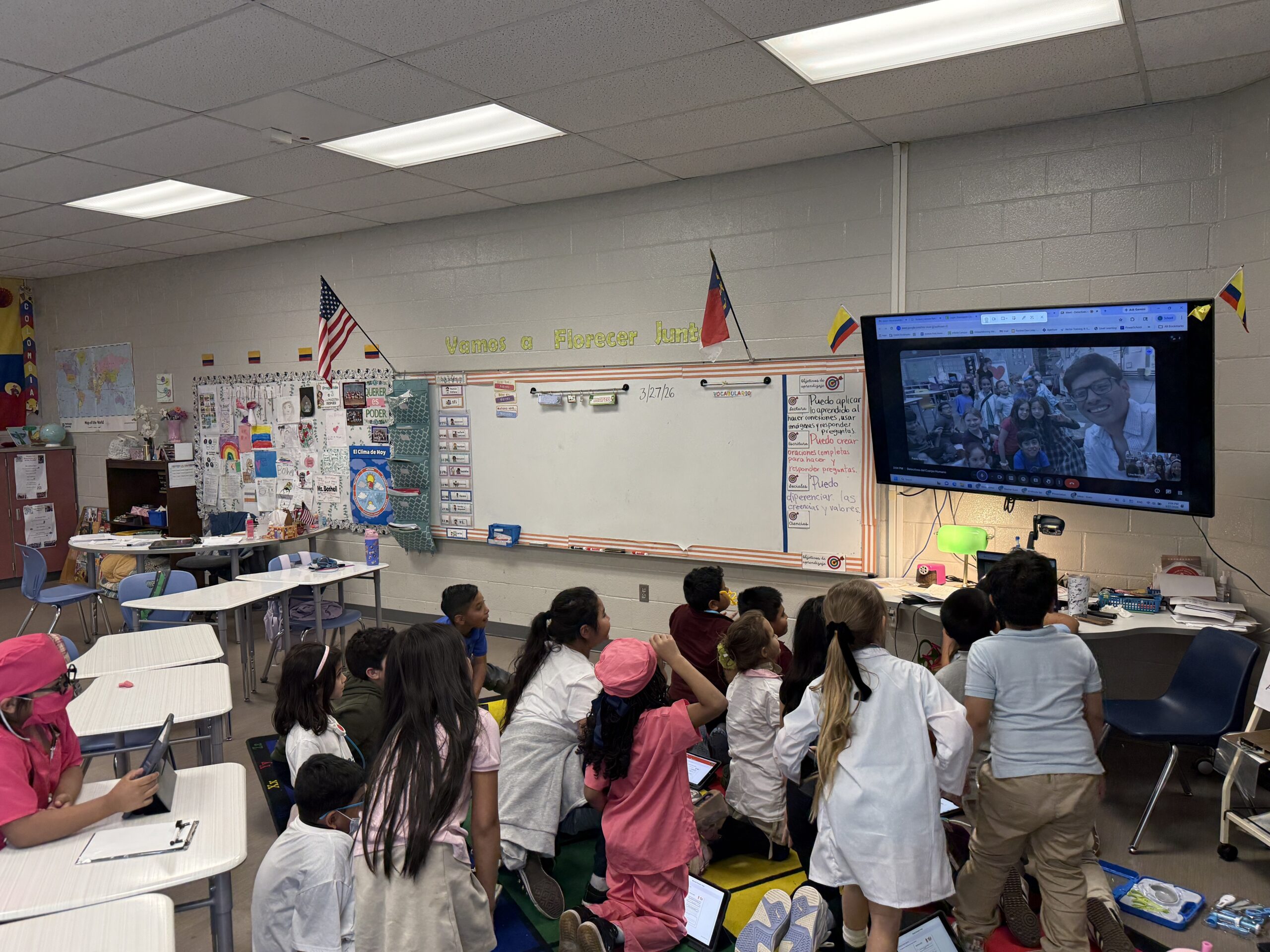
Dressed as doctors, nutritionists, and scientists, dual language (DL) students from Fred L. Wilson Elementary and Jackson Park Elementary (Kannapolis City Schools, NC) asked and answered questions about the human body using academic vocabulary in Spanish. They discussed healthy habits, body systems, and what they had learned throughout their unit, “Detectivos del Cuerpo Humano” (Human Body Detectives).
But the experience went far beyond a single virtual activity. Throughout the unit, students explored health- and wellness-related careers while practicing the kinds of communication, collaboration, and inquiry skills professionals use every day—with a real audience beyond their own classroom.
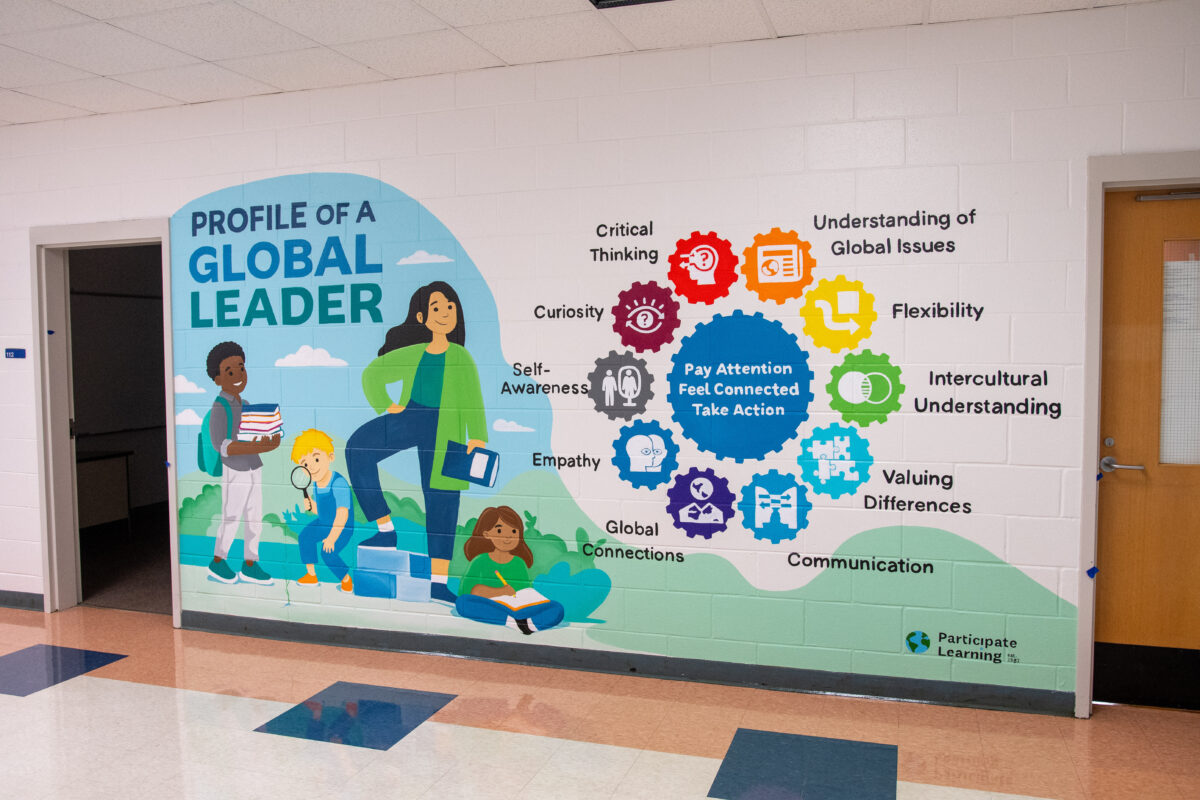
Both schools are part of Kannapolis City Schools’ partnership with Participate Learning, which supports dual language instruction alongside Global Leaders, a school transformation framework that helps students connect academic learning to real-world challenges and future opportunities. Through dual language education, students learn academic content in both English and Spanish, developing bilingualism and biliteracy while building the durable skills needed for life and work after graduation.
The exchange itself was the result of months of intentionally scaffolded collaboration between two dual language classrooms. Through ongoing interaction with peers, students gradually built the confidence to communicate, collaborate, and engage with real-world learning.
According to Pablo S., one of the teachers involved in the collaboration, that combination gave students “an authentic purpose for using language.” Dual language instruction gave them the language skills to communicate. Career-connected collaboration gave them a meaningful reason to use those skills.
Career readiness starts in elementary school
Career exploration helps students connect what they’re learning in school to their interests, strengths, and future possibilities. As part of a broader approach to career readiness, it gives students opportunities to build the skills, confidence, and sense of purpose they’ll need to make thoughtful decisions about their future.
In elementary school, career exploration isn’t about asking students to choose what they want to be when they grow up. It’s about helping them practice the kinds of thinking, collaboration, and problem-solving skills people use every day in real jobs. It also helps students see how the learning happening in their classroom connects to real-world challenges and opportunities.
Those connections are most powerful when they’re woven into everyday instruction instead of treated as a separate lesson or activity. Starting career exploration early gives students time to discover what interests them, recognize their strengths, and begin understanding how they can contribute to the world around them, long before they’re expected to make big decisions about their future.
The “Detectivos del Cuerpo Humano” unit is a concrete example of this in action. By connecting human body lessons to the real world, including exploring health and wellness careers, students had the opportunity to use their language skills to practice real-world skills: communication, inquiry, collaboration, and problem-solving.
Building competencies through connections
The group’s sense of authentic purpose didn’t appear overnight. Lina B. and Pablo S. intentionally developed it through a progression of collaborative experiences that gradually built students’ confidence and strengthened global competencies—the durable, career readiness skills that equip students to think critically, take action, and succeed in life and work after graduation.
Before winter break, their classes participated in an asynchronous Padlet exchange where students introduced themselves, shared pictures, and practiced writing about their personalities and interests. Later, students exchanged holiday letters connected to their social studies content about celebrations around the world. Through structured prompts, they reflected on their own traditions and learned about their peers’ experiences.
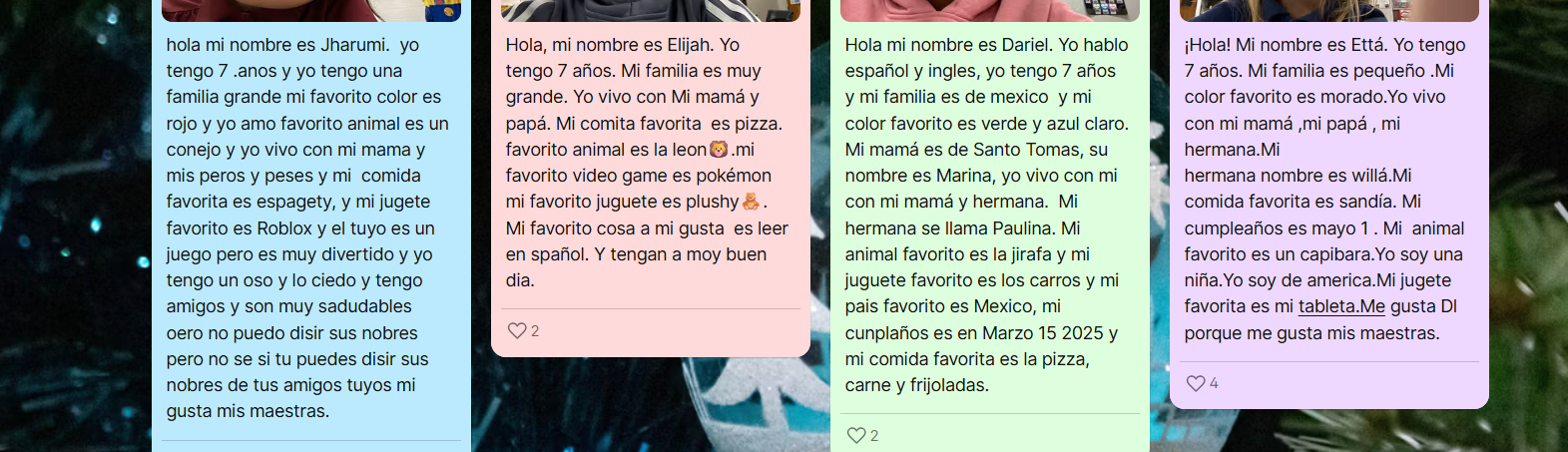
When live virtual collaboration began, students were no longer interacting with strangers. They had already spent months building familiarity and genuine connections with one another, which meant the real-time academic discussion could build on a foundation of trust rather than starting from scratch.
This progression from asynchronous exchanges to written letters to live discussion mirrors the kind of scaffolded skill-building that makes career readiness stick: students practice research, communication, and collaboration repeatedly, in connected contexts, long before they’re asked to apply those skills in formal settings.
Real-world application supports language learning and career exploration
For dual language students, authentic opportunities to use language are essential for building confidence and fluency. But those opportunities do double duty when they’re rooted in real-world application, because that’s also when career exploration happens naturally.
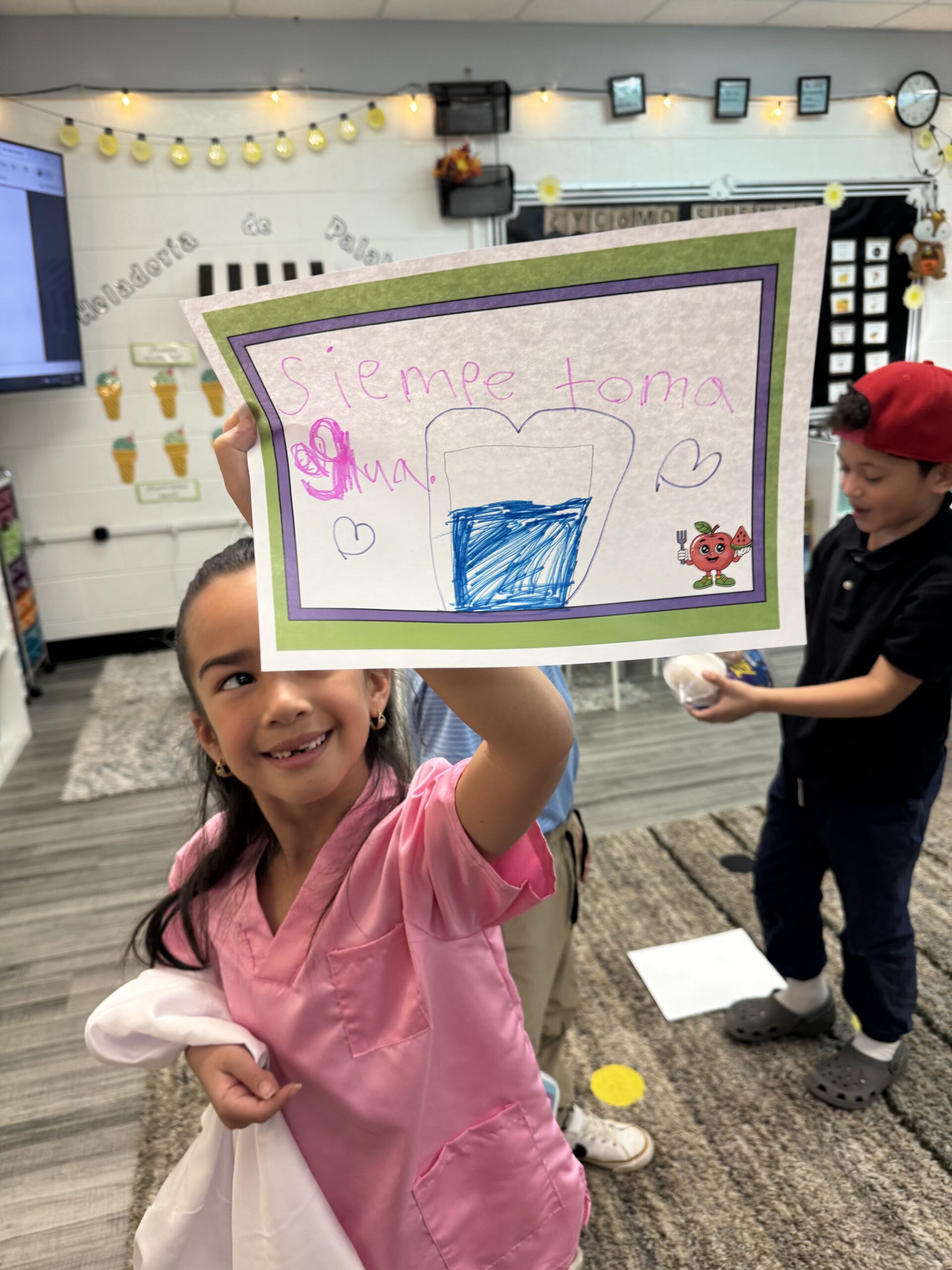
During the “Detectives del Cuerpo Humano” unit, students explored body systems and healthy habits through inquiry-based activities that went well beyond a textbook.
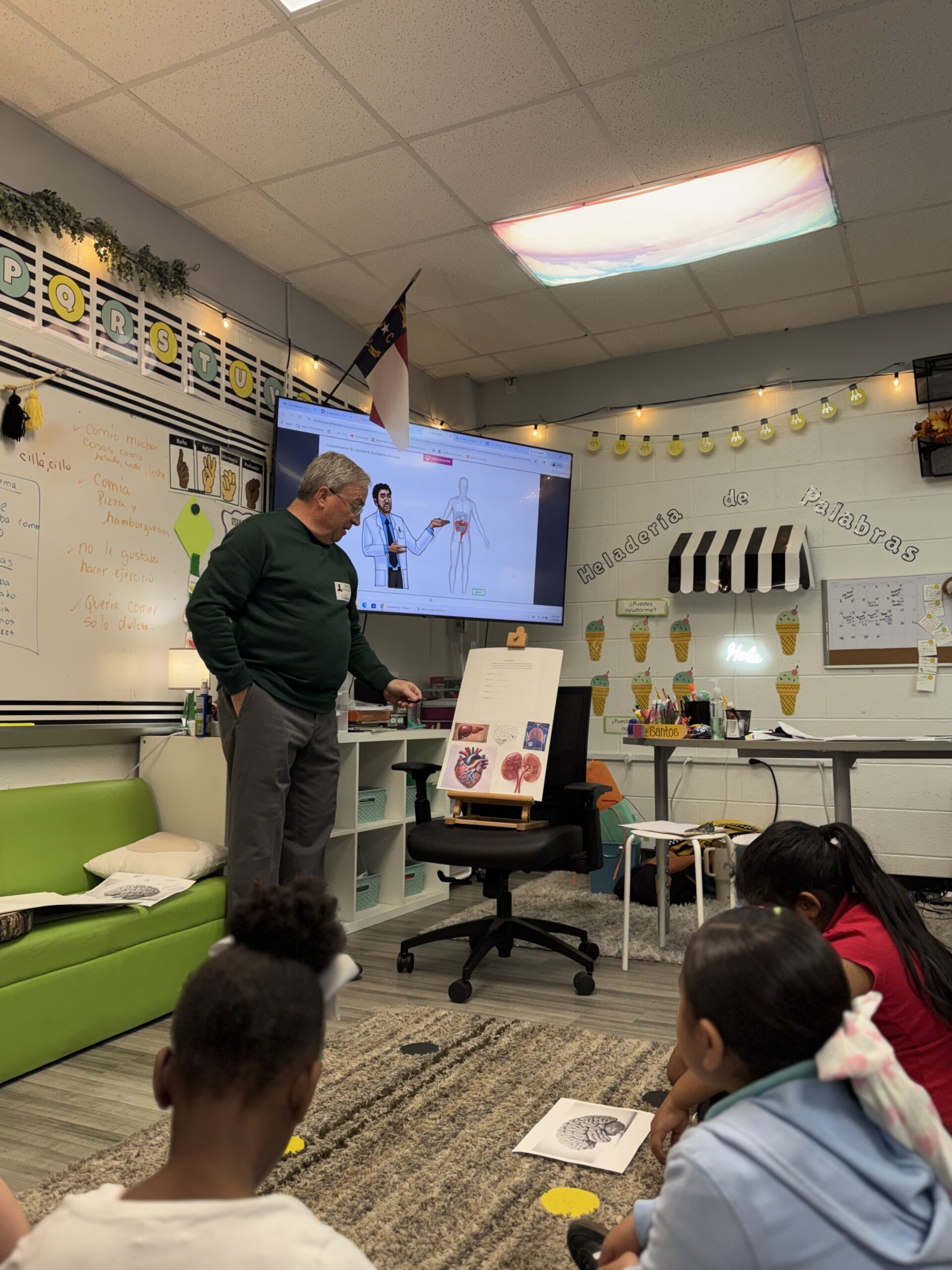
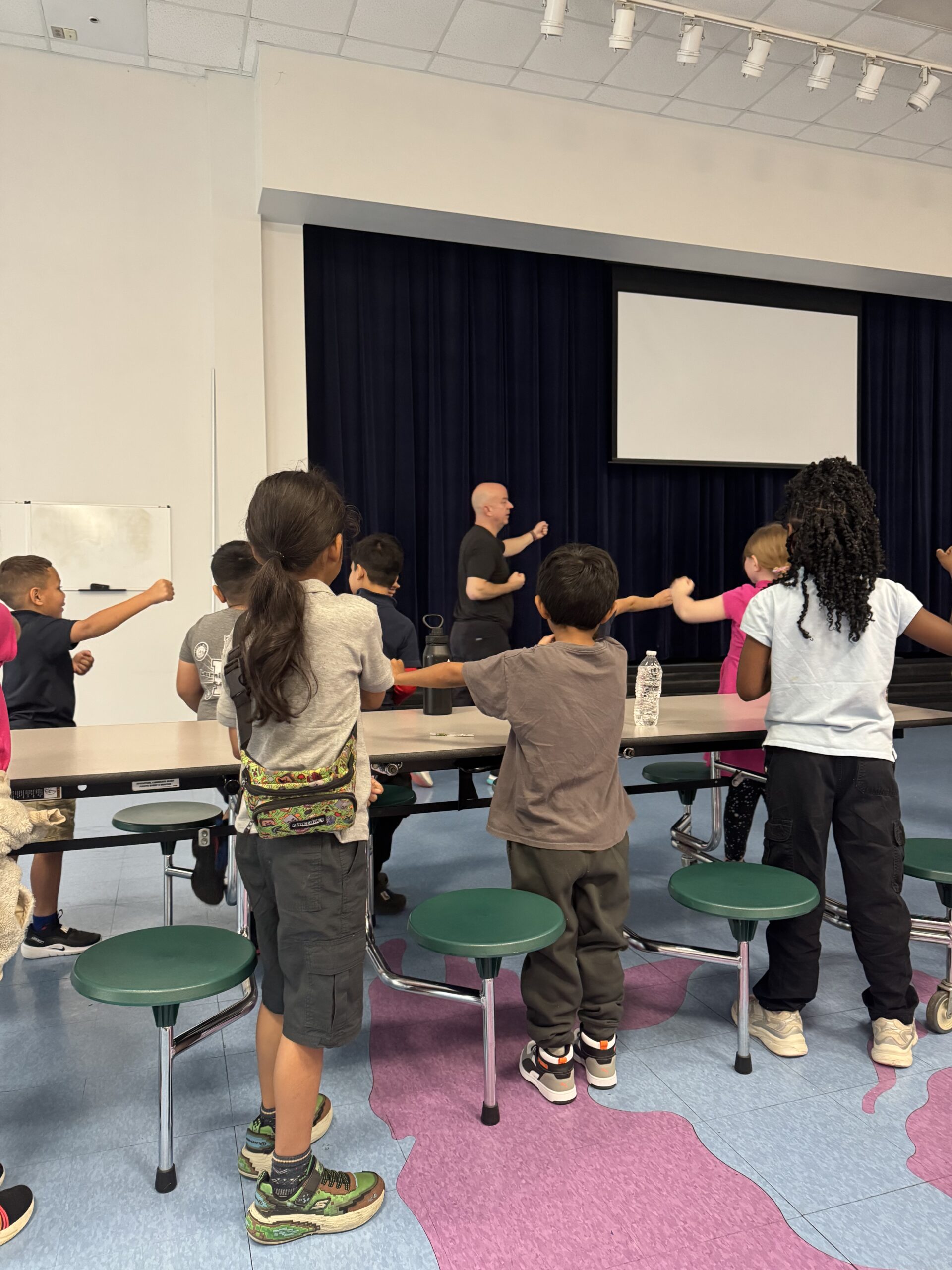
In Pablo’s class, the experiences also supported their school’s global challenge focus on improving health. A visiting neurologist explained how the brain works. Students did Zumba with Pablo and explored the relationship between martial arts and physical health. Each experience put students in contact with a real profession and a real application of what they were learning. This kind of exposure helps elementary students begin to see how academic content connects to the world outside school.
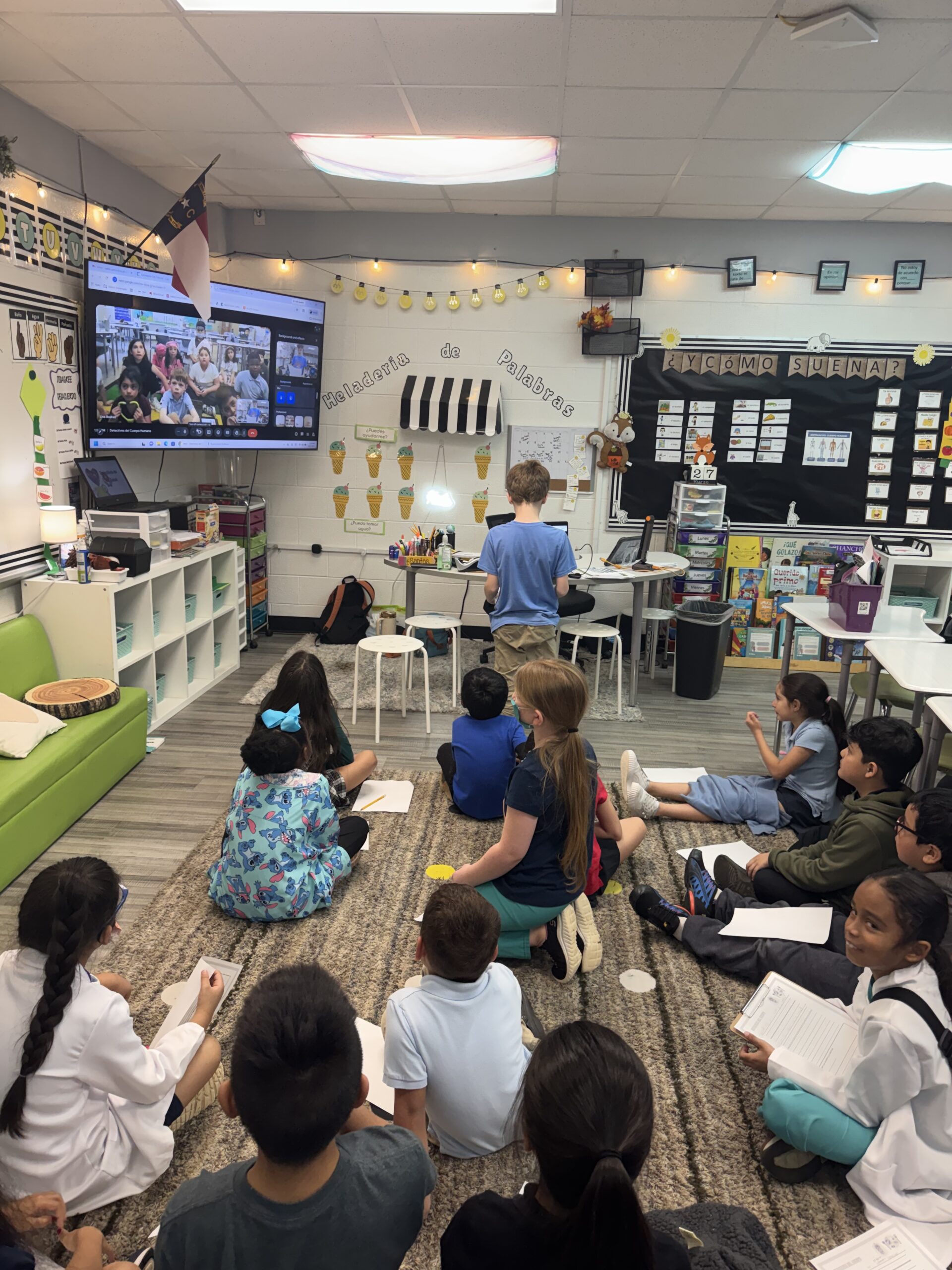
That foundation carried directly into how students prepared for the virtual exchange. They practiced key vocabulary, developed their own questions, and came ready to discuss what they’d learned with a real audience. During the live interaction, students took turns asking and answering questions with their partner class, applying content knowledge and language skills together in real time.
Researching a topic, forming questions, and presenting findings to peers are the same skills professionals use every day. Rather than practicing those skills in the abstract, these second graders were using them to have a genuine and purposeful conversation.
Collaboration: A bridge between language learning and future careers
Through ongoing interaction with peers, students used language to build relationships and deepen understanding together. By asking questions, listening to each other, sharing ideas, and exploring health and wellness in real-world contexts, they also strengthened global competencies like curiosity and critical thinking—the same skills that employers consistently identify as essential for career success.
As Lina reflected, “These collaborative opportunities have been incredibly meaningful for our students. They not only supported academic standards but also fostered communication, cultural awareness, and enthusiasm for learning.”
A model aligned with your school’s goals
One of the most valuable aspects of this collaboration is that the approach doesn’t require extensive programming or expensive resources. Teachers created opportunities for communication and connection using tools and lessons already in place.
Through Kannapolis City Schools’ partnership with Participate Learning, teachers in Global Leaders schools receive the support and professional development to transform existing units into learning experiences that connect academic content to the world beyond the classroom.
Experiences like “Detectives del Cuerpo Humano” show how schools can create relevant, scaffolded opportunities for even the youngest students to apply language skills and practice the habits of mind that make career readiness real.
Learning with purpose
The collaboration between Fred L. Wilson Elementary and Jackson Park Elementary turned what could have been a standard unit on the human body into an opportunity to use language with purpose and learn alongside peers beyond their own classroom walls.
In the process, students developed their bilingual skills and used them to connect, collaborate, and engage with the world. That’s what career exploration looks like when it starts early.
For more examples of dual language or career readiness in action, check out:
- How Melaleuca Elementary Turned a Science Fair into Career-Connected Learning
- Transforming Education Through Language Immersion and Global Learning in Pitt County Schools
- Career Exploration in K–12 Schools: A District Framework for Every Grade