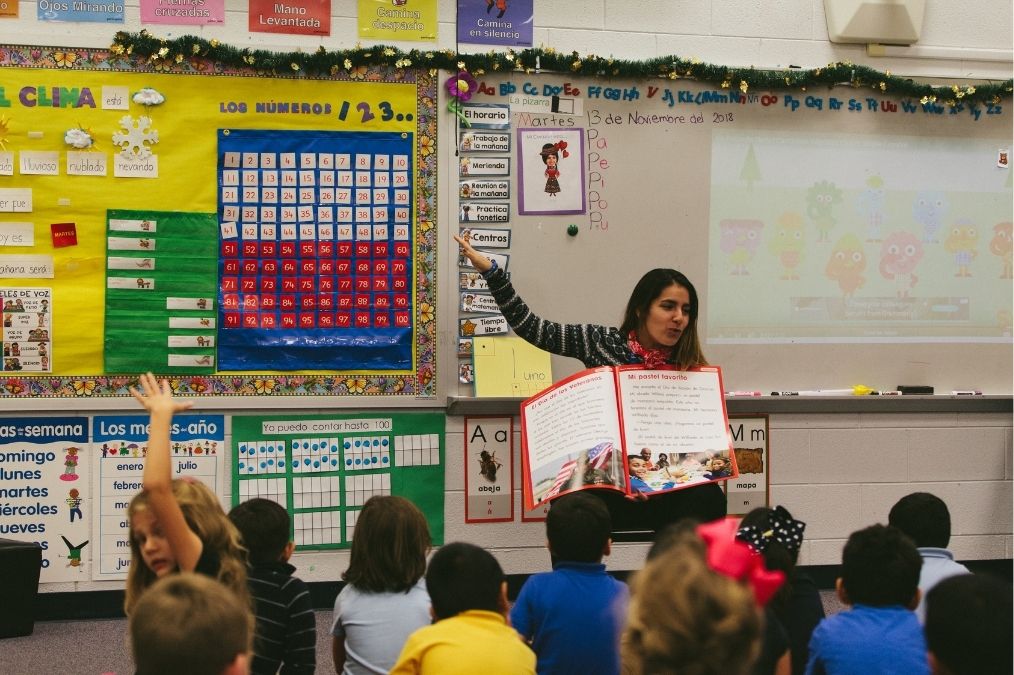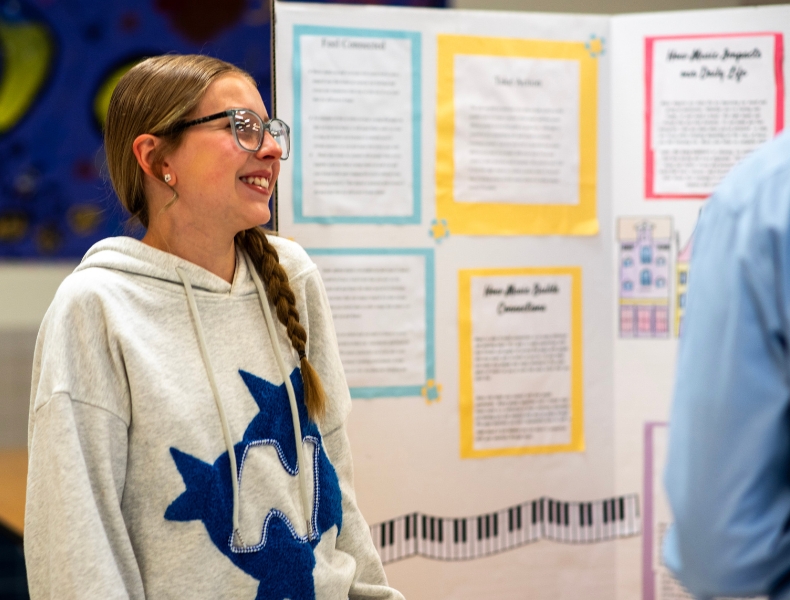
Every day in school, students explain ideas, ask questions, collaborate in groups, and present their thinking—all forms of communication. And just like in the classroom, strong communication skills are essential for success in every career.
Teaching communication skills in K–12 means giving students structured opportunities to practice speaking, listening, writing, and visual expression. These activities help students learn to adjust their message for different audiences, express ideas clearly, and listen with empathy.
Centering communication as an intentional focus of instructional routines helps students build confidence in sharing their ideas and responding thoughtfully to others. These habits strengthen academic learning while also contributing to students’ development of career readiness skills that will serve them long after graduation.

That’s why, at Participate Learning, communication is one of the ten core global competencies emphasized in Global Leaders, our school transformation framework designed to build career-ready students, foster shared leadership, unify school culture, and strengthen community ties. These competencies help schools intentionally develop the skills students need to succeed academically and thrive in future careers.
In this article, we’ll explore how communication skills develop in K–12 classrooms, why they matter for students’ long-term success, and practical strategies teachers can use to build these skills across grade levels.
In this article:
- How to teach communication skills in K–12 classrooms
- What students learn by practicing communication skills in K–12
- Classroom strategies to teach communication skills in K–12
- What communication skills look like in action at Melaleuca Elementary
- Frequently asked questions about teaching communication skills in K–12
- Why communication skills matter for career-ready students
How to teach communication skills in K–12 classrooms
Teaching communication skills works best when students practice them consistently in meaningful classroom situations. Teachers can build strong communication habits by focusing on a few core practices:
- Model effective communication by demonstrating how to explain ideas clearly and respond thoughtfully.
- Use structured discussion routines like turn-and-talks or partner sharing to give students regular speaking opportunities.
- Provide authentic audiences for writing and presentations so students learn to adjust their message.
- Teach active listening strategies with sentence stems and guided peer discussions.
- Include reflection and feedback so students can improve their communication over time.
These strategies help students develop confidence and clarity as communicators while reinforcing the collaboration and problem-solving skills they will use in future careers.
What students learn by practicing communication skills in K–12
When students practice communication, they also build other career readiness skills, like critical thinking, collaboration, and curiosity, that help them grow into effective leaders and problem-solvers.
In the classroom, these skills develop through everyday interactions. Students learn how to engage with others in ways that are thoughtful, respectful, and productive. They pause before responding. They notice when a classmate looks confused and rephrase their explanation. They begin to find the right words to express ideas they are still developing.
That kind of intentional practice builds habits that carry across every subject area. In schools that prioritize communication, students learn to:
- Explain their thinking and support it with evidence
- Adjust their tone and message based on their audience
- Listen actively to understand, not just to respond
- Use body language and visuals to strengthen their message
- Ask meaningful questions and respond with purpose
These abilities extend far beyond the classroom. When students regularly practice real-world communication skills, classroom habits become the workplace communication skills they’ll need to thrive in any career—from healthcare and education to business, science, and public service.
According to the National Association of Colleges and Employers, communication skills consistently rank among the most important abilities employers look for in new graduates. Helping students build these skills early prepares them to collaborate effectively, express their ideas clearly, and contribute confidently in professional settings.
Classroom strategies to teach communication skills in K–12
Teaching communication skills doesn’t require a separate curriculum. With the right routines and activities, teachers can weave communication practice into everyday lessons across grade levels and subject areas.
Communication can take many forms—verbal, nonverbal, written, and visual—and students benefit from consistent, low-stakes opportunities to practice each one. Here are four high-impact communication skills activities teachers can adapt for their classrooms.
1. Use turn-and-talk to build communication skills
Turn-and-talks give students a low-pressure way to rehearse ideas, build confidence, and strengthen speaking and listening skills before sharing with a larger group. It’s also one of the simplest communication skills activities teachers can implement during classroom discussions.
Before whole-class conversations, invite students to share their ideas with a partner. Prompts might include:
- “What’s one thing you noticed?”
- “How would you explain this in your own words?”
- “What questions do you still have?”
This structure helps students clarify their thinking and prepare to share with the group, especially for students who need extra processing time.
Career connection: The ability to think through an idea before speaking—and to listen carefully when others share their ideas—is essential in the workplace. From team meetings to collaborative projects, turn-and-talk routines help students build these habits early.
2. Add purpose and audience to writing tasks
Even in early grades, students can begin tailoring their writing for different audiences. This helps students understand that communication skills in the classroom extend beyond speaking and listening to include purposeful writing.
Instead of writing only to their teacher, students might:
- Write letters to school leaders about a school rule and how it impacts students
- Create thank-you notes for community helpers
- Design posters explaining a concept to younger students
- Craft opinionated reviews about why classmates should (or shouldn’t!) read a certain book
Younger students might write a letter to the school principal explaining what they love about their class. Older students might draft a public service announcement for their community or compose an email to a local organization asking to visit for a field trip. While the format changes, the key question stays the same: who is the audience, and what do they need to understand?
Career connection: Professionals write for different audiences every day: clients, colleagues, and the public. Helping students consider audience and purpose builds a skill they’ll use throughout their careers.
3. Incorporate active listening activities that build understanding
Active listening activities help students focus on the speaker, interpret verbal and nonverbal cues, and respond in ways that demonstrate understanding.
Students can practice active listening by watching a short video together and discussing questions such as:
- How did the listener show they were listening?
- What helped the listener stay focused?
- What made communication easier or more challenging?
Next, invite students to practice active listening in pairs or small groups using sentence stems like:
- “What I hear you saying is…”
- “I’d like to build on that idea…”
- “I agree with [name] because…”
- “I have a different perspective…”
Additional active listening activities include partner paraphrasing and a “listening detective” exercise where students listen for key details and summarize what they heard.
Career connection: In professions like health care, education, law, and leadership, listening carefully shapes how effectively people can help and collaborate with others. Students who practice active listening learn to understand before they respond—a skill that builds trust in any setting.
4. Invite students to communicate through visual formats
Communication isn’t limited to speaking and writing. Visual formats offer students additional ways to express ideas and connect with an audience.
Students who struggle to find the right words may discover they communicate powerfully through images, design, or multimedia formats.
Teachers might invite students to:
- Create an infographic explaining a science concept
- Design a storyboard illustrating a sequence of events
- Produce a short “news segment” summarizing what they’ve learned
- Cultivate a playlist that represents various themes from a book
In these activities, the format is secondary. What matters is that students choose how to communicate their ideas effectively and consider how an audience will interpret the message.
Career connection: From slide decks to digital media to design briefs, modern workplaces ask people to communicate in formats beyond words alone. Students who practice visual communication early are better prepared to share ideas in whatever form the work requires.
What communication skills look like in action at Melaleuca Elementary
While these strategies can be used in any classroom, some schools extend communication practice through larger student-led projects.
At Melaleuca Elementary in West Palm Beach, Florida, fourth- and fifth-grade students took on a challenge that pushed their communication skills to new levels: giving their own TED-style talks.
Each student selected a global issue that mattered to them—from access to clean water to environmental sustainability—and researched its causes and impacts. With their teachers’ guidance, students crafted messages designed to inform, persuade, and inspire their audience.
After practicing organizing their ideas, speaking clearly, and adjusting their tone and pacing, students then presented their talks to classmates and members of the school community.
Projects like these give students the chance to practice real-world communication skills: public speaking, visual communication, and storytelling, while discovering the impact their voices can have.
TED-style talks are just one way to build public speaking skills for students. Other effective student presentation activities include:
- Gallery walks
- Mini research presentations
- Persuasive pitch projects
- Debates
By combining research, storytelling, and presentation, students see firsthand how communication connects learning to purpose and how their voices can make an impact far beyond the classroom.
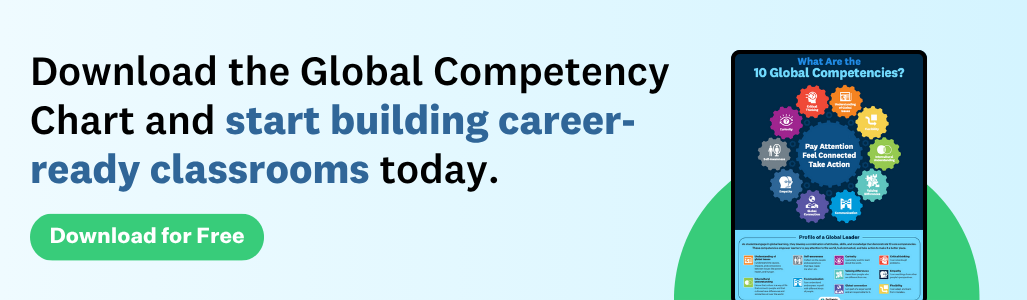
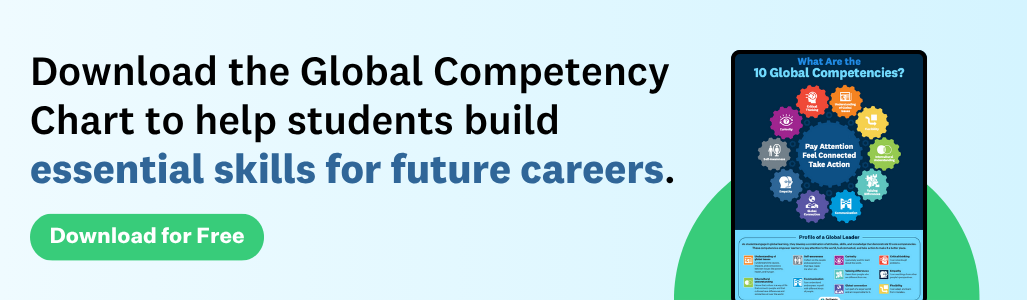
Want to strengthen communication in your classroom or school? Download our free Global Competency Chart and explore more ways to build future-ready skills through Global Leaders.
Frequently asked questions about teaching communication skills in K–12
How do you teach communication skills in K–12 classrooms?
To teach communication skills in K–12 classrooms, provide students with regular opportunities to speak, listen, write, present, and respond to peers. Use structured routines like turn-and-talk discussions, active listening activities, visual communication tasks, and audience-aware writing to help students build confidence over time.
What are examples of communication skills for students?
Communication skills for students include speaking clearly, listening actively, asking thoughtful questions, presenting ideas to an audience, writing for specific purposes, and using visuals to support a message. These skills help students collaborate effectively and share their thinking with confidence.
What are the best communication activities for elementary students?
Effective communication activities for elementary students include turn-and-talk discussions, show-and-tell presentations, partner retelling exercises, visual storytelling, and simple presentation tasks supported by sentence stems and visual aids. These activities build foundational skills in a supportive environment.
What does a communication skills lesson plan include?
Communication skills lesson plans typically include:
- A clear communication skill focus
- Teacher modeling
- Guided practice
- Student discussion or presentation
- Reflection or feedback
Strong lesson plans also connect communication practice to academic content and career readiness skills.
What are active listening activities for students?
Active listening activities for students include partner paraphrasing, listening for key details, sentence-stem response practice, video observation exercises, and structured peer feedback sessions. These activities help students focus on the speaker and respond thoughtfully.
How do I assess communication skills effectively?
Teachers can assess communication skills using rubrics that focus on specific, observable behaviors such as eye contact, voice clarity, organization of ideas, and active listening. Combining teacher observations with peer feedback and student self-reflection creates a comprehensive picture of student growth. For schools using Global Leaders, the framework includes a set of communication indicators for each grade level span that can serve as ready-made benchmarks for both instruction and assessment.
For example, the Global Leaders 2nd–3rd Grade Global Competencies Student Rubric includes this progression for one communication indicator:
- Not Yet: I can explain my ideas or share stories with others.
- Yes: I can explain my ideas or share stories with others in a way that they can understand.
- Yes And: I can evaluate the best strategies to use when sharing ideas with an audience.
What strategies work best for shy or reluctant speakers?
Start with low-stakes opportunities, such as turn-and-talk discussions or small-group conversations before moving to whole-class sharing. Provide sentence stems and allow students time to prepare their thoughts. Celebrate small steps and consistently invite students to contribute without pressuring them to participate.
How do communication strategies differ across grade levels?
Elementary students benefit from concrete sentence stems, visual cues, and structured discussion routines. Middle and high schoolers can engage in more complex activities such as peer feedback sessions, debates, and larger communication-focused projects. For schools looking to make that progression explicit, Global Leaders outlines specific communication indicators at each grade level span, giving teachers a concrete framework to reference as they plan instruction and track student growth.
For example, this is the progression for one communication indicator from the Global Leaders 9–12 Global Competencies Student Rubric:
- Not Yet: I ask for and use feedback to improve my effectiveness in sharing ideas and stories with an audience.
- Yes: I can plan for various messages on a topic. I can adapt my communication based on information I am receiving from my audience.
- Yes And: I can plan for and adapt my communication based on verbal and nonverbal cues from my audience, and reflect on my communication skills afterward by identifying areas for improvement.
What technology tools support communication skill development?
Digital storytelling platforms, video reflection tools, and collaborative discussion boards can enhance communication practice. However, face-to-face interaction remains essential. Technology works best when it supplements—not replaces—direct conversation and collaboration.
How can I integrate communication skills across different subjects?
Every subject offers opportunities to strengthen communication skills. Students might explain their reasoning in math, discuss observations in science, or debate historical perspectives in social studies. Integrating communication into existing lessons allows students to practice these skills naturally.
What’s the best way to handle disagreements during discussions?
Address potential conflict proactively by establishing clear norms for respectful dialogue. Teach students to focus on ideas rather than individuals and provide phrases such as “I see it differently because…” to model constructive disagreement and valuing differences.
How do I know if my communication instruction is working?
Look for increased student participation, more thoughtful responses, and students naturally using communication strategies introduced in class. Regular check-ins and student reflections can help teachers adjust their approach based on student growth.
Why communication skills matter for career-ready students
When students build strong communication skills, they become capable speakers and writers, effective teammates, thoughtful leaders, and confident problem-solvers.
These abilities develop over time through consistent opportunities to speak, listen, collaborate, and present ideas. As students practice these habits in class, they begin to understand how communication helps people work together, solve problems, and share ideas that make a difference. It’s also exactly what employers are looking for when they hire new graduates.
That readiness shows up in real ways. Whether students are collaborating with classmates, presenting to new audiences, or building relationships with people from different backgrounds, communication is what makes collaboration possible. The habits they practice in class become the tools they reach for in the world beyond it.
At Participate Learning, we partner with schools to help students develop global competencies like communication, collaboration, and leadership through meaningful classroom experiences.
Looking to strengthen career readiness skills like communication in your students?
Learn more about how Global Leaders helps schools prepare students to thrive in a world that demands innovation, collaboration, and a global perspective.