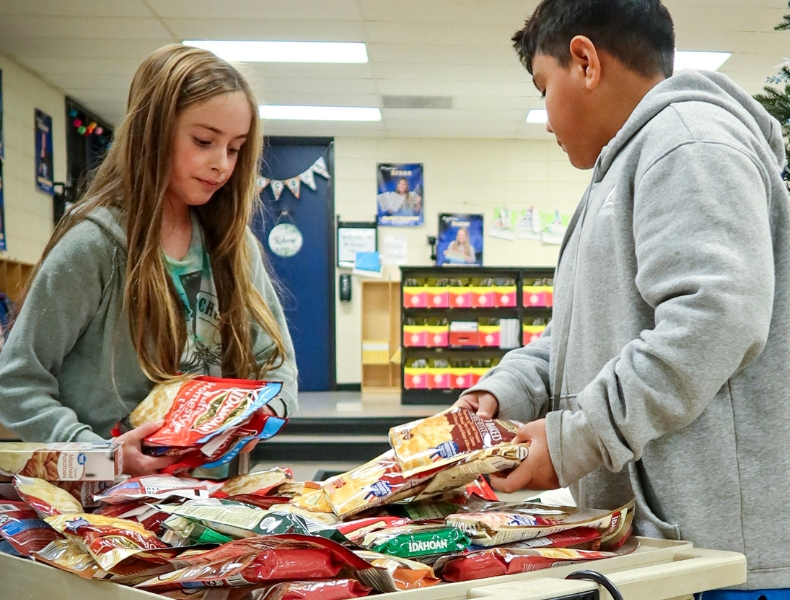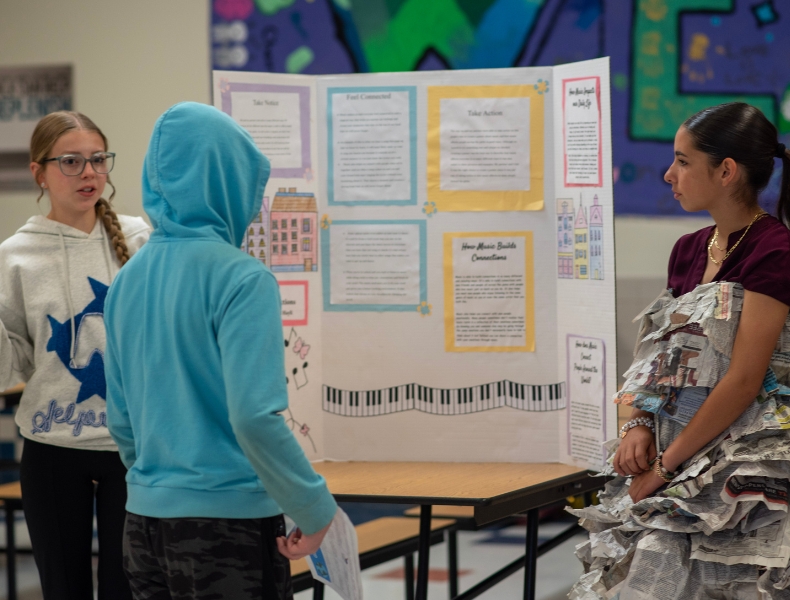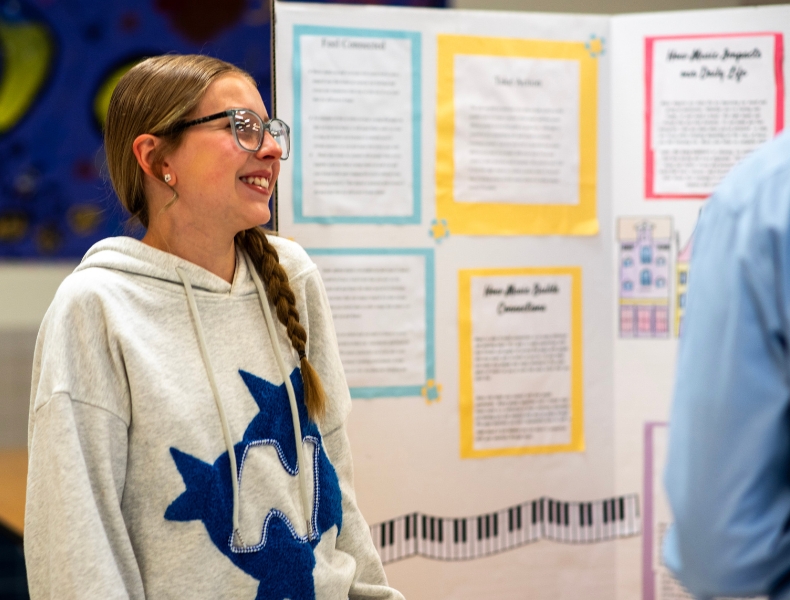
At Stanfield Elementary (Stanly County Schools, NC), third graders spent weeks researching how agriculture works across the world, learning about floating dairy farms in the Netherlands, solar-powered greenhouses in Spain, and food systems shaped by climate and culture.
They organized their findings, designed posters, built 3D models, and presented their findings to an audience of peers and teachers. In the process, they did much more than study agriculture. They were practicing the kind of work that sits at the heart of building career readiness skills: researching complex questions, organizing information, communicating ideas clearly, and connecting classroom learning to real issues people solve in the world every day.
“It’s a big topic for third grade,” one teacher said. “But they rose to the challenge.”
This is what career exploration in K–12 schools can look like when it starts early. It’s not asking an eight-year-old what they want to be when they grow up. Instead, it begins by helping students see how what they’re learning connects to real fields, real problems, and the kinds of skills they’re already developing.
When career exploration is built into daily learning, students have space to discover how their interests and strengths connect to the real world long before they’re asked to make decisions about their future.
In this article:
- What is career exploration in K–12 schools?
- Why career exploration belongs in every grade
- What makes career exploration stick
- How the Blueprint for a Better World connects learning to career pathways
- What career exploration looks like across a district
- From classroom learning to career readiness
- Frequently asked questions about career exploration
What is career exploration in K–12 schools?
Career exploration in K–12 schools is the process of helping students across every grade level connect their learning, interests, and strengths to future opportunities.
Why career exploration belongs in every grade
By elementary and middle school, students are already developing a sense of what they enjoy, what they’re good at, and whether school feels meaningful. That’s why career exploration in schools is most effective when it starts early and builds over time.
A 2018 report from the Association for Career & Technical Education highlights middle school as a critical period when students are developing identity, abstract thinking, and interest in real-world problem-solving.
In a strong K–12 career readiness approach, elementary school lays the foundation for career exploration by providing opportunities for students to:
- engage with real-world topics;
- develop awareness of how classroom learning applies to contexts beyond school;
- practice skills professionals use daily, such as communication, collaboration, and critical thinking; and
- begin to realize that what they’re learning connects to things they care about and ways they might contribute.
This foundation develops through repeated, connected learning over time.
Career exploration: What makes career readiness stick
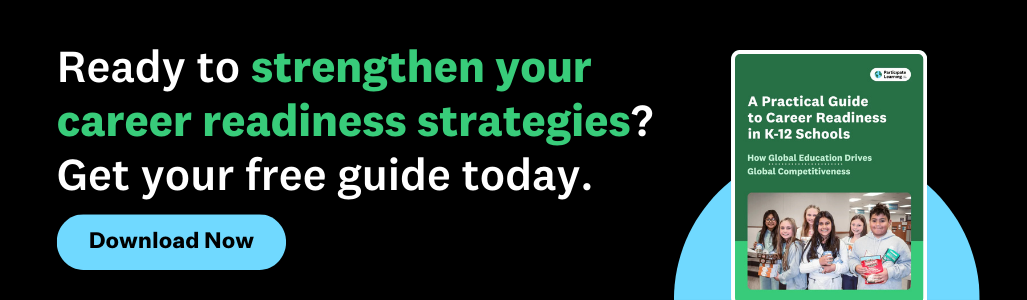
Career exploration leads to meaningful career readiness when it’s embedded in daily learning. By engaging in real-world challenges, students naturally build transferable skills like communication, collaboration, and problem-solving while discovering how their interests connect to future pathways.
Traditional career awareness approaches such as career days, guest speakers, and job shadowing still play an important role in career exploration. They create exposure and spark interest.
However, they also have limits.
- They reach only a small number of students
- They depend on coordinating schedules and availability
- They’re difficult to scale consistently across schools
Shifting from career awareness to career integration helps expand the impact. Embedded career exploration doesn’t replace those experiences but anchors them in something more durable: learning that is rooted in real-world, global challenges and builds the skills students will use far beyond the classroom.
How the Blueprint for a Better World connects learning to pathways
If career exploration depends on connecting learning to real-world challenges, the question becomes, What gives districts a consistent way to do that? The Blueprint for a Better World provides that structure.

Participate Learning’s Blueprint for a Better World organizes learning around three overarching themes:
- Protect the Planet
- Care for the People
- Build for the Future
Within those themes, students explore challenges like:
- Clean water
- Food access
- Environmental sustainability
These challenges serve as the bridge connecting academic content → real-world issues → career pathways.
Why the Blueprint works
Imagine a science class begins a unit on clean water. Beyond the science of water systems, that unit can also create entry points into environmental engineering, public policy, and community health.
A unit on food access can also connect to agriculture, economics, nutrition, and nonprofit leadership. Rather than siloing these topics into a single career lesson, schools can help students see these connections naturally by grounding their learning in real-world challenges.
Example: Career exploration in action
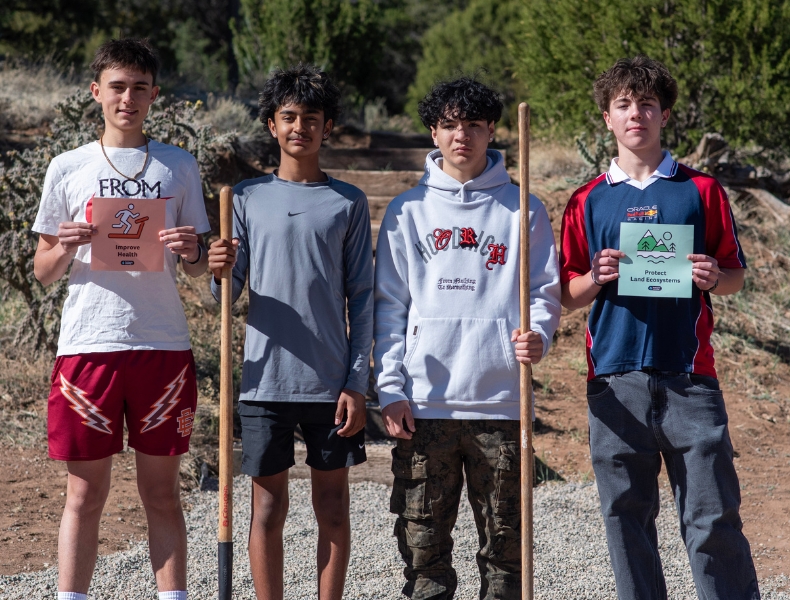
At Heritage Middle School (Burke County Public Schools, NC), students noticed how much single-use plastic came from their breakfast program. Instead of just analyzing the issue, they took action: launching a recycling initiative, partnering with school leaders and local organizations, and helping reduce plastic bag use across campus.
As they worked through the project, they began to see links to careers in environmental science, communications, and public policy, not because those connections were introduced separately, but because the experience made them visible.
That kind of experience distinguishes career exploration that sticks from career exploration that fades.
See how districts build career exploration into instruction:
What career exploration looks like across a district
Across a district, career exploration is most effective when it’s consistent and built into a shared instructional framework. As students experience learning that is connected through elementary and high school, they develop skills, interests, and direction over time, arriving at graduation with a stronger sense of purpose and career readiness.
A shared framework makes that connected learning possible. Global Leaders, our school transformation framework that unifies the community to prepare students for future careers, builds on the Blueprint by giving districts:
- A shared instructional approach
- A schoolwide value system built around the global competencies
- A continuous K–12 experience
Why consistency in career exploration matters
When career exploration is isolated, it depends on individual teachers, varies from classroom to classroom, and is difficult to sustain. When it’s system-wide, students:
- Build skills year over year
- Connect their experiences across grade levels and content areas
- Begin to understand their own interests
- Recognize how their interests connect to the real world
- Practice applying their learning in meaningful ways
The results in Global Leaders schools reflect the impact of that consistency. Schools in the network have seen enrollment growth of up to 30% compared to matched peer schools. Ninety-four percent of teachers agree that the framework equips students with durable, future-ready skills. And because Global Leaders integrates into existing academic priorities rather than competing with them, it gives district leaders a way to advance career readiness, student engagement, and academic rigor as a single coherent effort, not three separate ones.
From classroom learning to career readiness
While career exploration has traditionally been understood as helping students choose a job, it involves so much more. Understanding what they care about, developing transferable skills, and realizing they can contribute in impactful ways are all critical steps to help students not only prepare for their future, but see their place in it.
Frequently asked questions about career exploration
What is career exploration in schools?
Career exploration in schools is the process of helping students connect their learning, strengths, and interests to future possibilities across grade levels. When part of a comprehensive approach to career readiness, it helps students develop the habits of mind, skills, and sense of purpose that make career decisions more informed and intentional.
Why should career exploration start before high school?
Students who develop a sense of purpose earlier show stronger engagement and clearer direction later. Starting career exploration early gives them the foundation that makes high school career planning meaningful.
How can districts integrate career exploration into academic instruction?
The most effective approach embeds career exploration into existing instruction. Traditional strategies like career days and guest speakers create exposure and spark interest, but their reach is limited and can be difficult to scale. That’s the difference between career awareness and career integration: one creates memorable moments, the other builds durable habits of thinking and doing. Frameworks like Global Leaders connect learning to real-world challenges, helping students practice career-relevant skills—research, collaboration, creative thinking—as part of daily learning.
What is the Blueprint for a Better World?
The Blueprint for a Better World is a framework developed by Participate Learning that connects classroom learning to real-world global and local challenges, helping students see how academic content connects to careers, community, and real-world impact.
How does career exploration support district goals?
When implemented across K–12, career exploration supports student engagement, academic persistence, and enrollment while aligning multiple district priorities into a single approach.
Career exploration starts with what students experience every day.
See how districts are building it into K–12 learning. Download the ebook to get started.